A quick note: Mikki is my wife, so this isn’t a customer review. It’s a trip I planned for the two of us, shared here as an example of how we put a trip together.
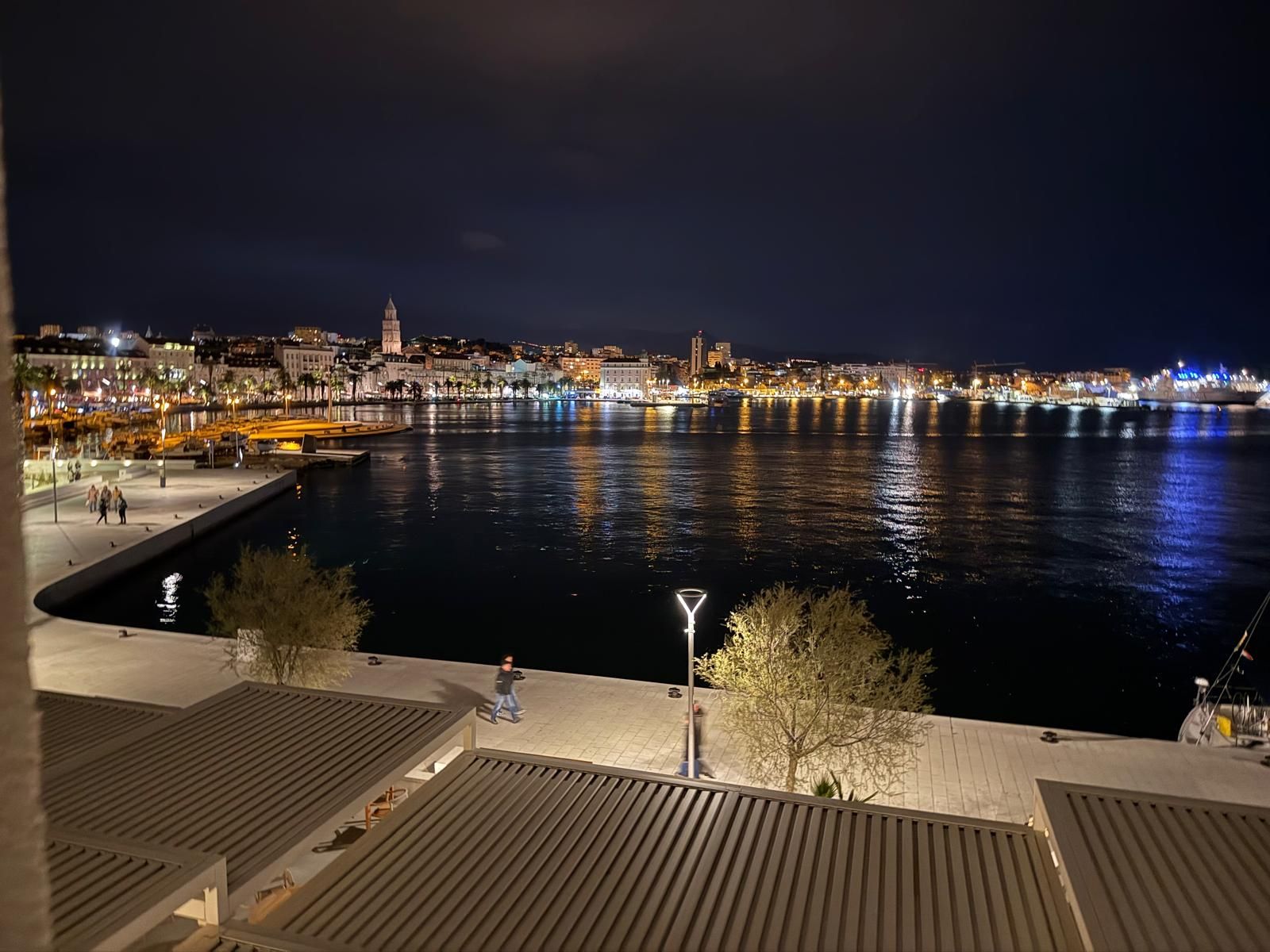
Picture this: it’s your first night in Croatia. You step out onto a balcony above the harbor in Split, and the whole waterfront is glowing. Lights shimmer on the water, the cathedral’s bell tower rises over the rooftops of a 1,700-year-old Roman palace, and somewhere below, glasses clink at a café on the promenade. That was the view that welcomed Mikki and me, and it set the tone for the whole week.
Days 1–3: Split, where the Old Town lives inside a Roman palace
Home base was Hotel Ambasador, a five-star hotel right on the waterfront promenade. From the front door it’s an easy, flat stroll along the Riva into Diocletian’s Palace, the Roman emperor’s seaside retirement home that the city simply grew up inside of. Today it isn’t a museum behind ropes. People live here. You turn a corner and find laundry hanging between ancient walls, a café tucked into a 1,700-year-old archway, and narrow lanes that open suddenly onto sunny squares.
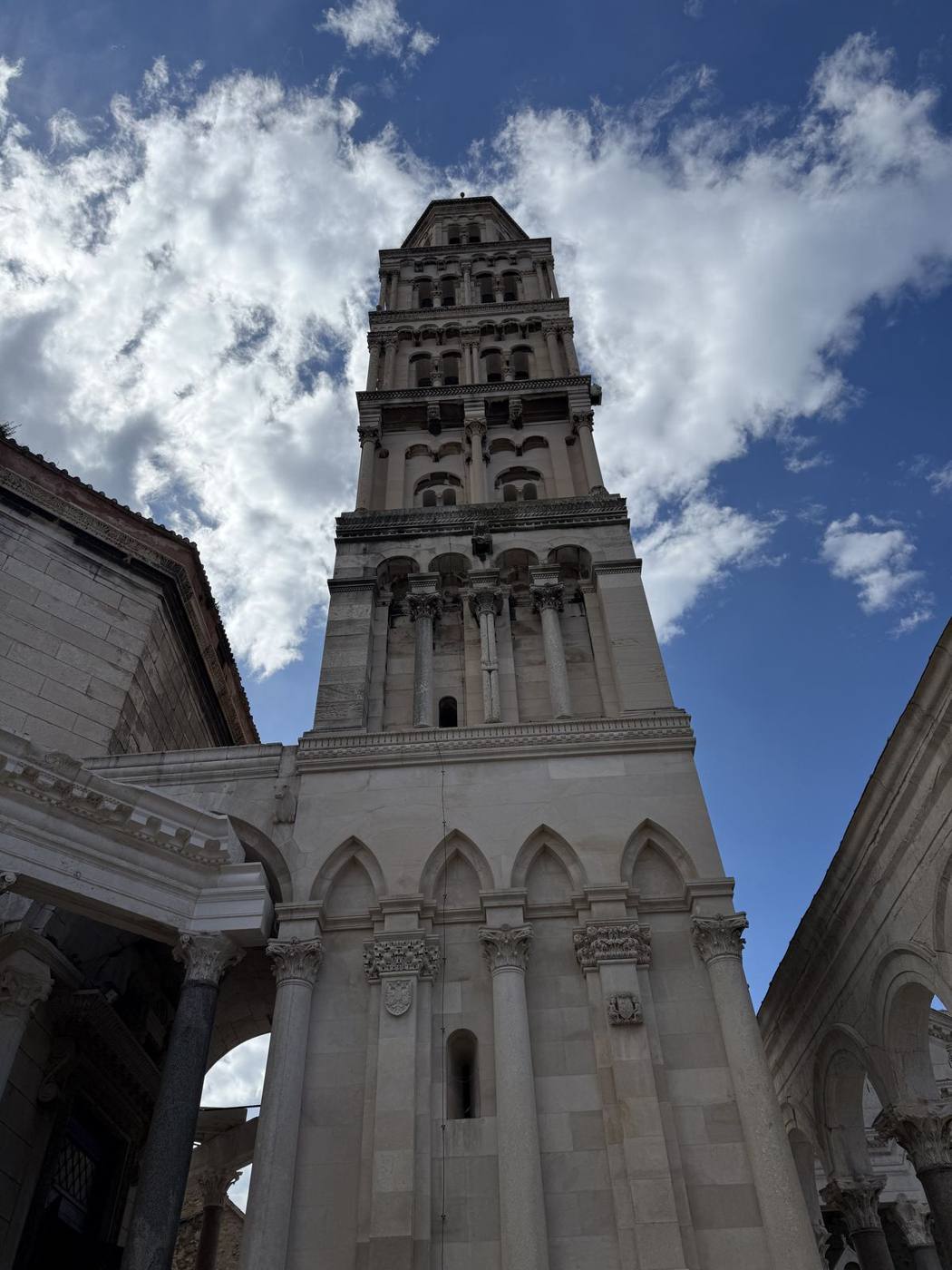
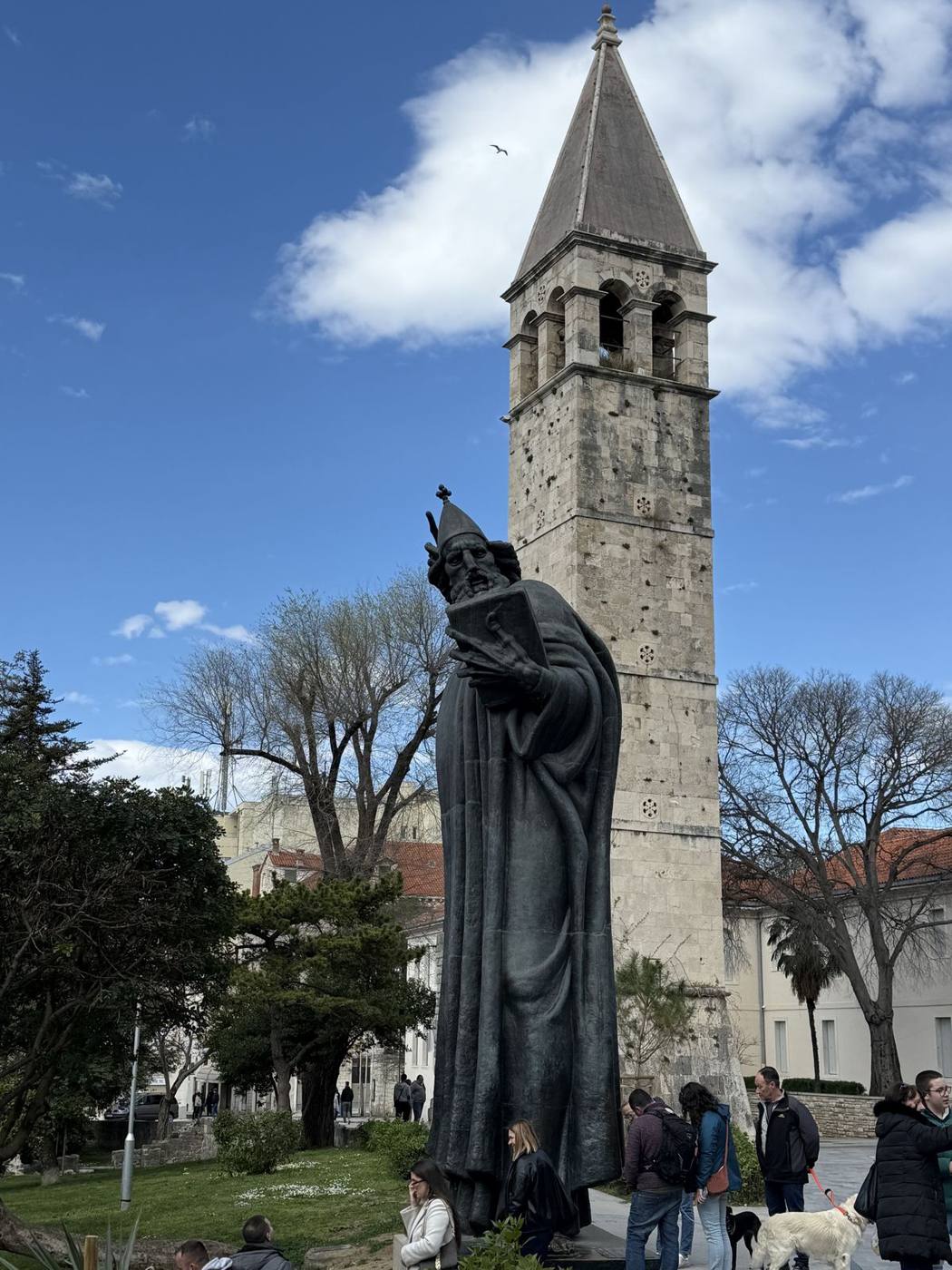
We spent our first morning just wandering: craning our necks at the cathedral’s bell tower, ducking into tiny shops, and stopping for an Aperol spritz whenever a sunny table appeared. Just outside the Golden Gate stands the giant bronze statue of Gregory of Nin. Rub his big toe for luck, like everyone else. It’s been polished to a bright gold by thousands of hopeful hands.
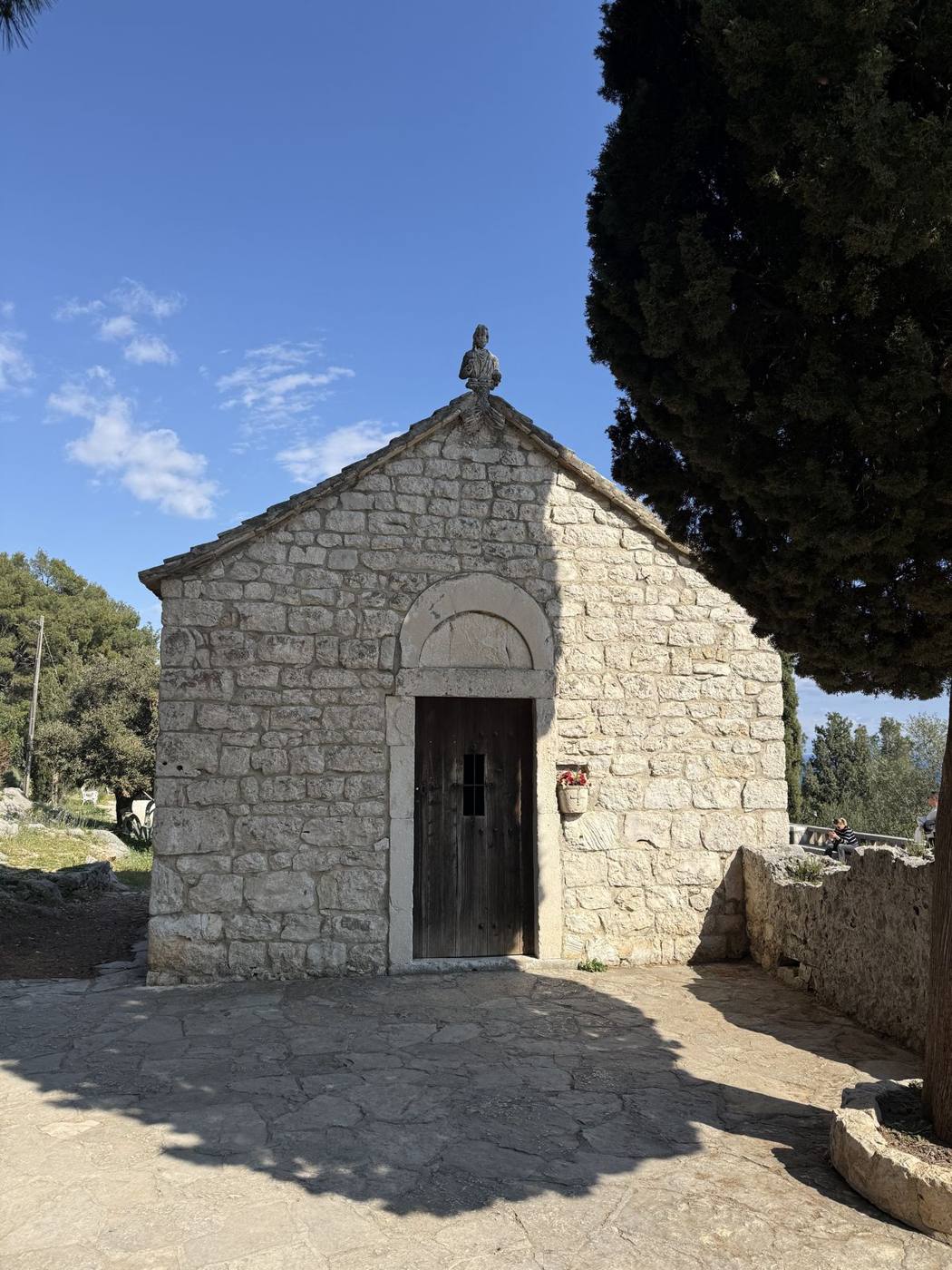
Marjan Hill: Split’s green escape
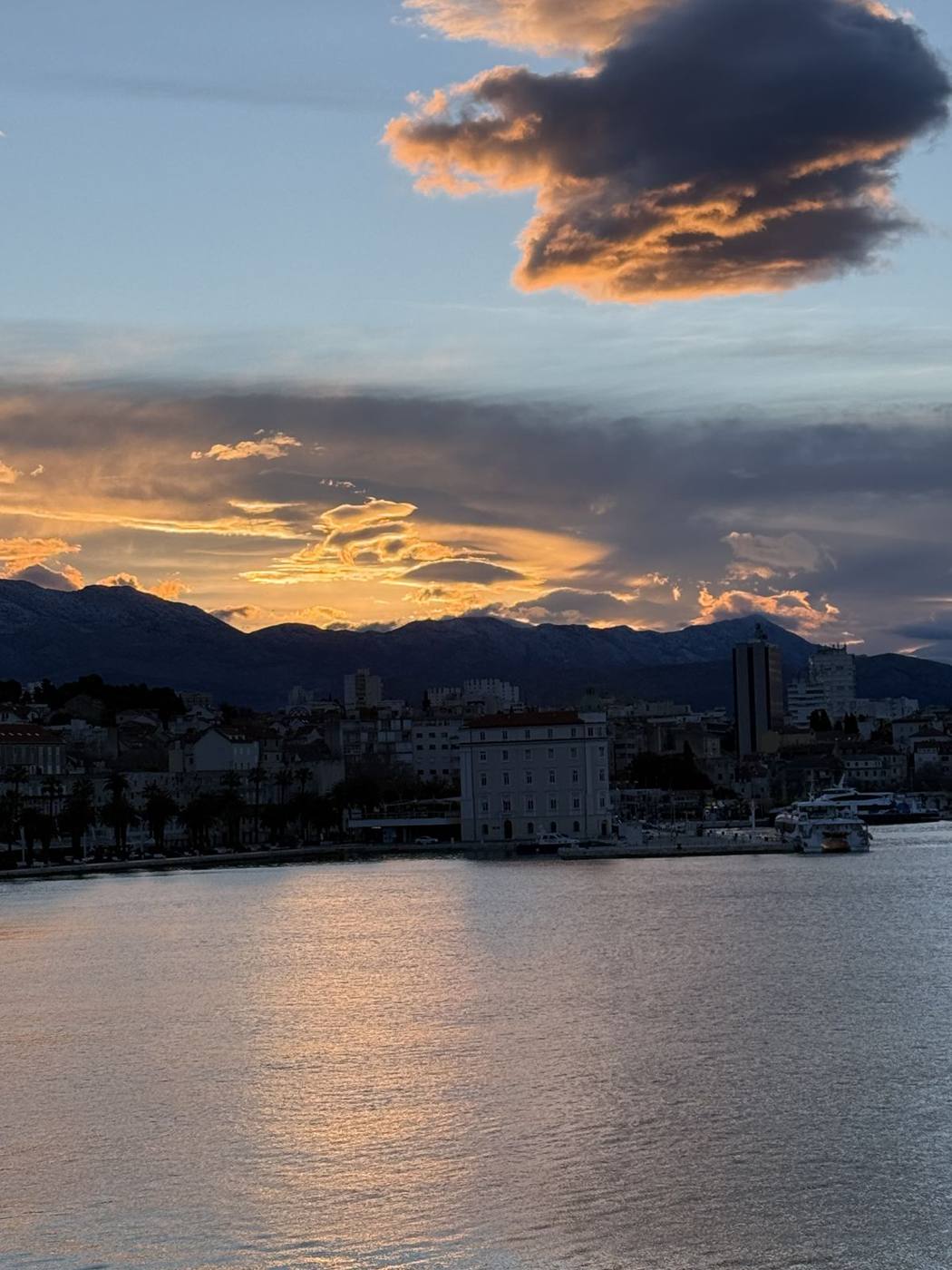
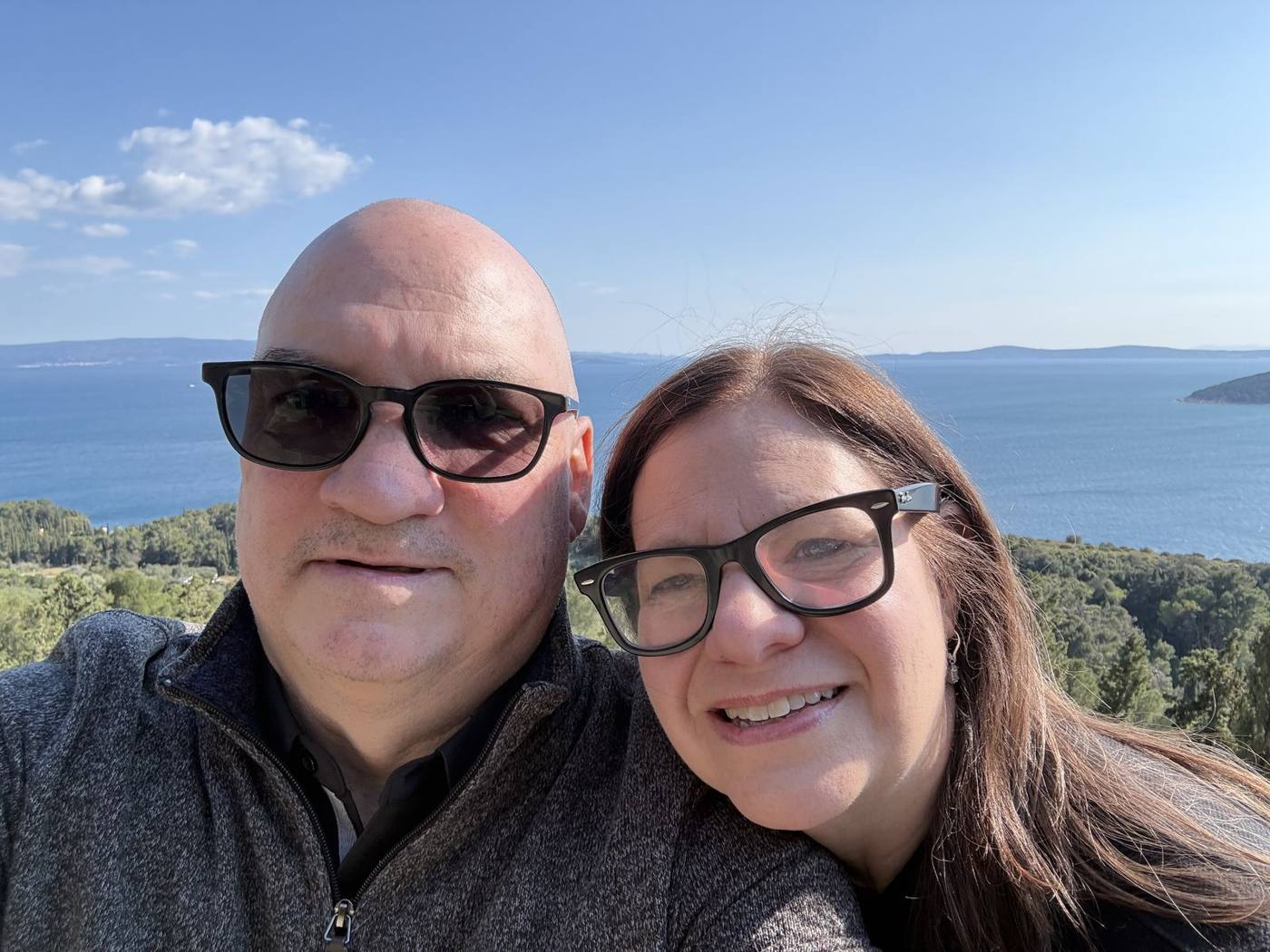
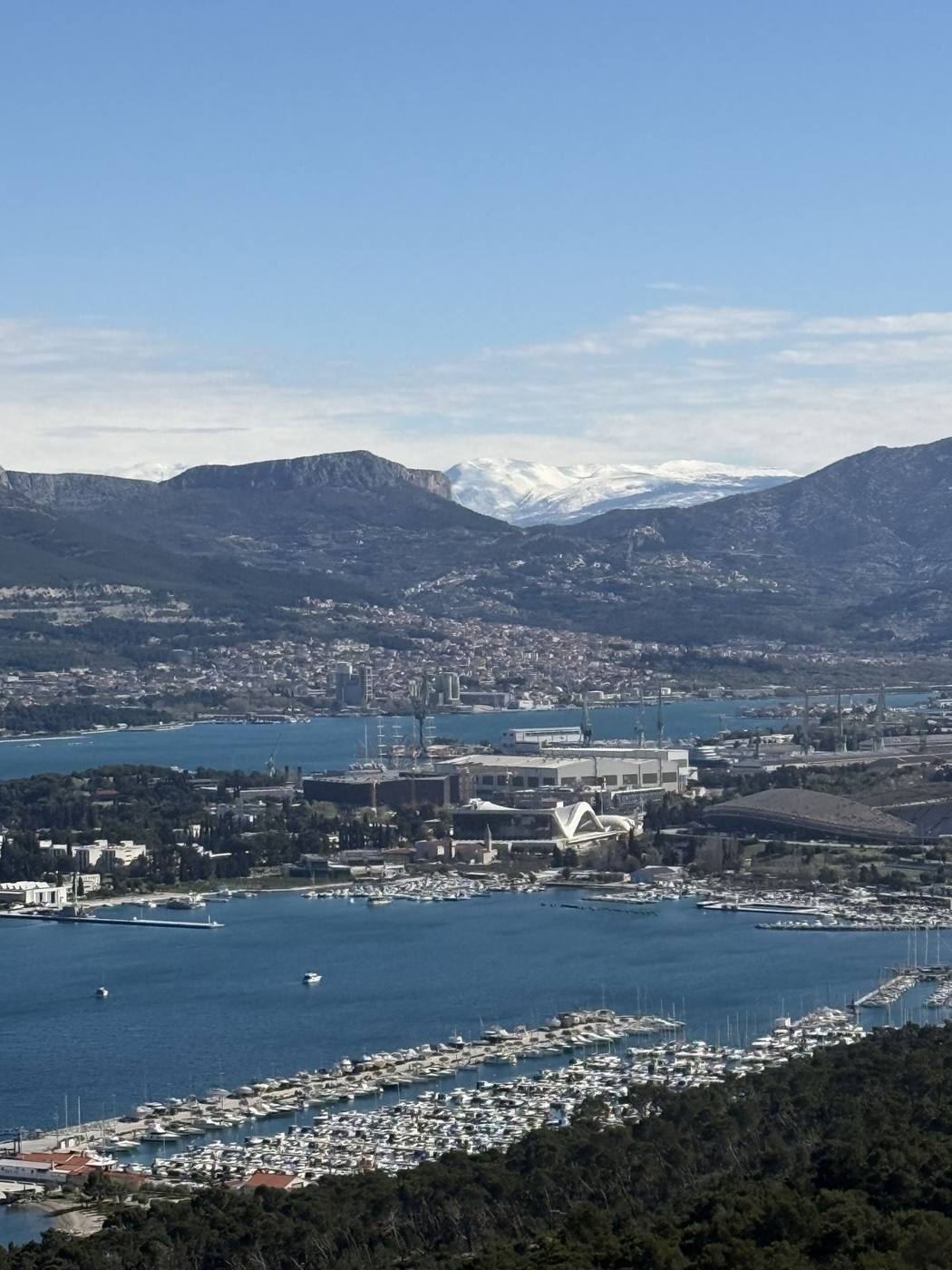
When you’re ready for a break from the stone streets, head up Marjan Hill, the wooded park at the western end of town. The stairs start right from the old town, and after a short climb the city sounds give way to pine trees, birdsong and lookouts over the sea. We passed the little stone Church of St. Nicholas and kept climbing until the whole bay spread out below us: red roofs, ferries tracing white lines across the water and snow still capping the mountains behind the city.
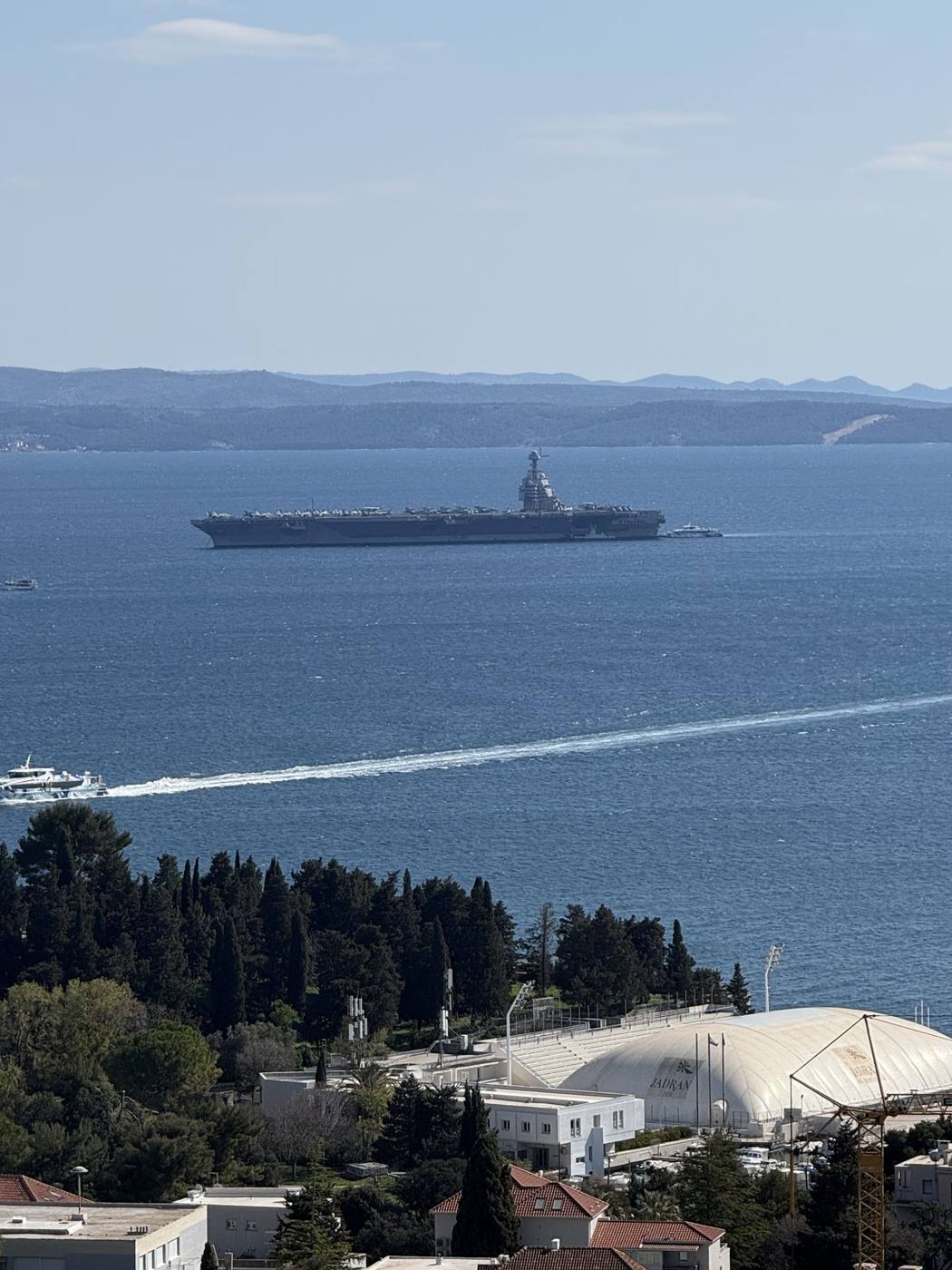
For this old veteran, there was a bonus. Anchored offshore was the USS Gerald R. Ford (CVN-78), the Navy’s newest aircraft carrier. A café near the waterfront even had a chalkboard sign offering the crew 10% off. Seeing her sitting out on the Adriatic was one of those moments you don’t plan, and you never forget.
Day trip: Trogir, a medieval town on its own little island
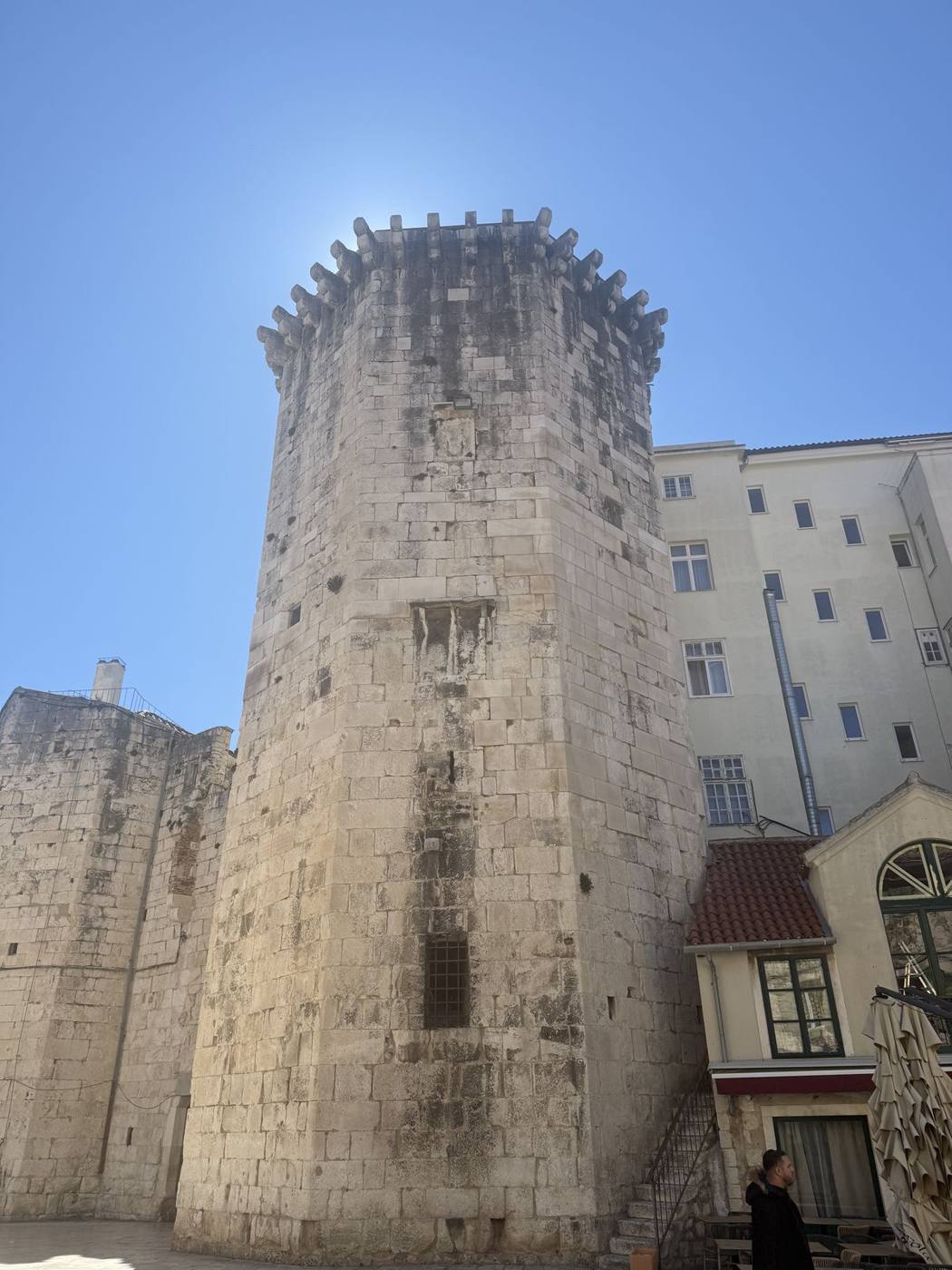
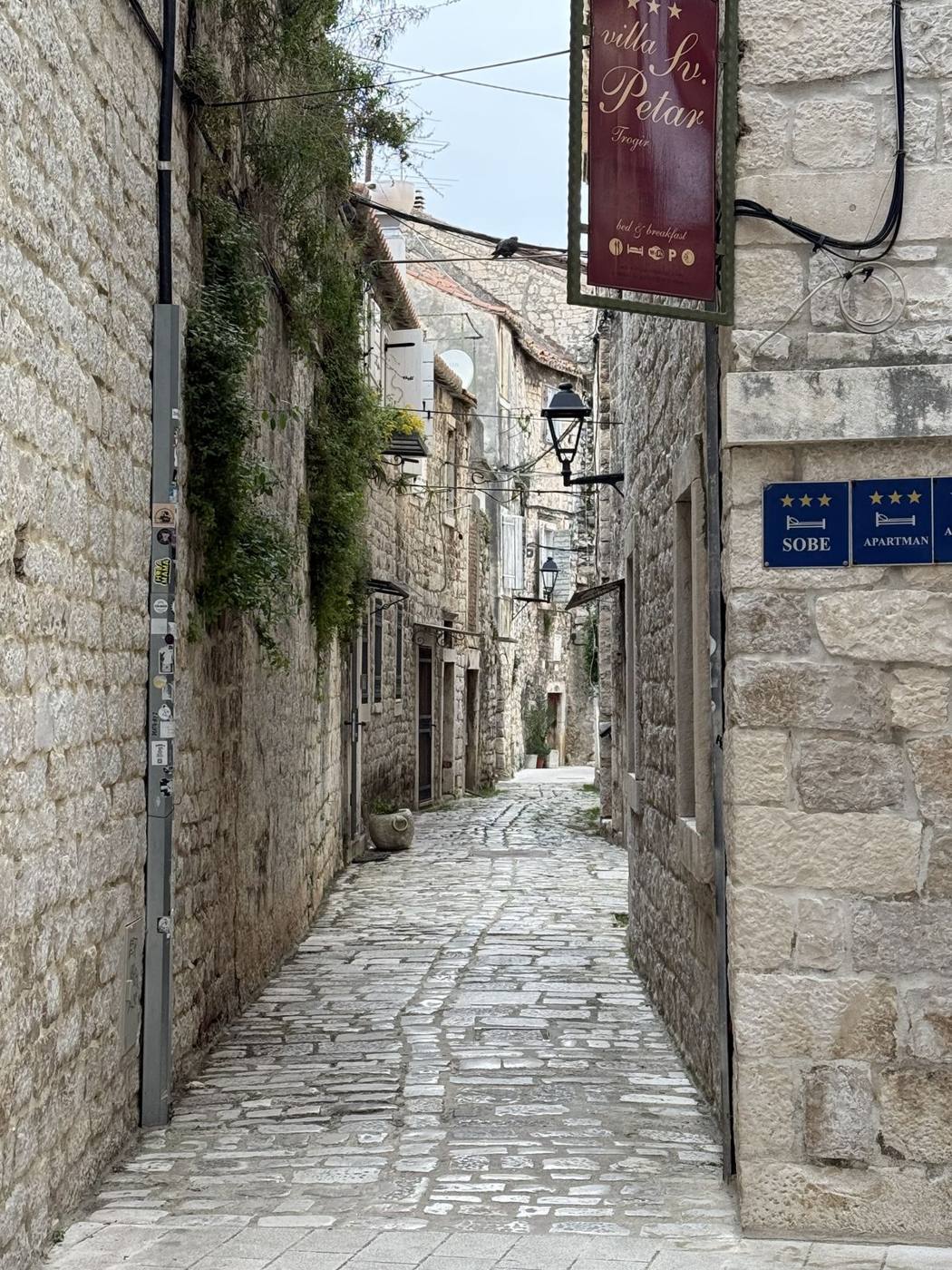
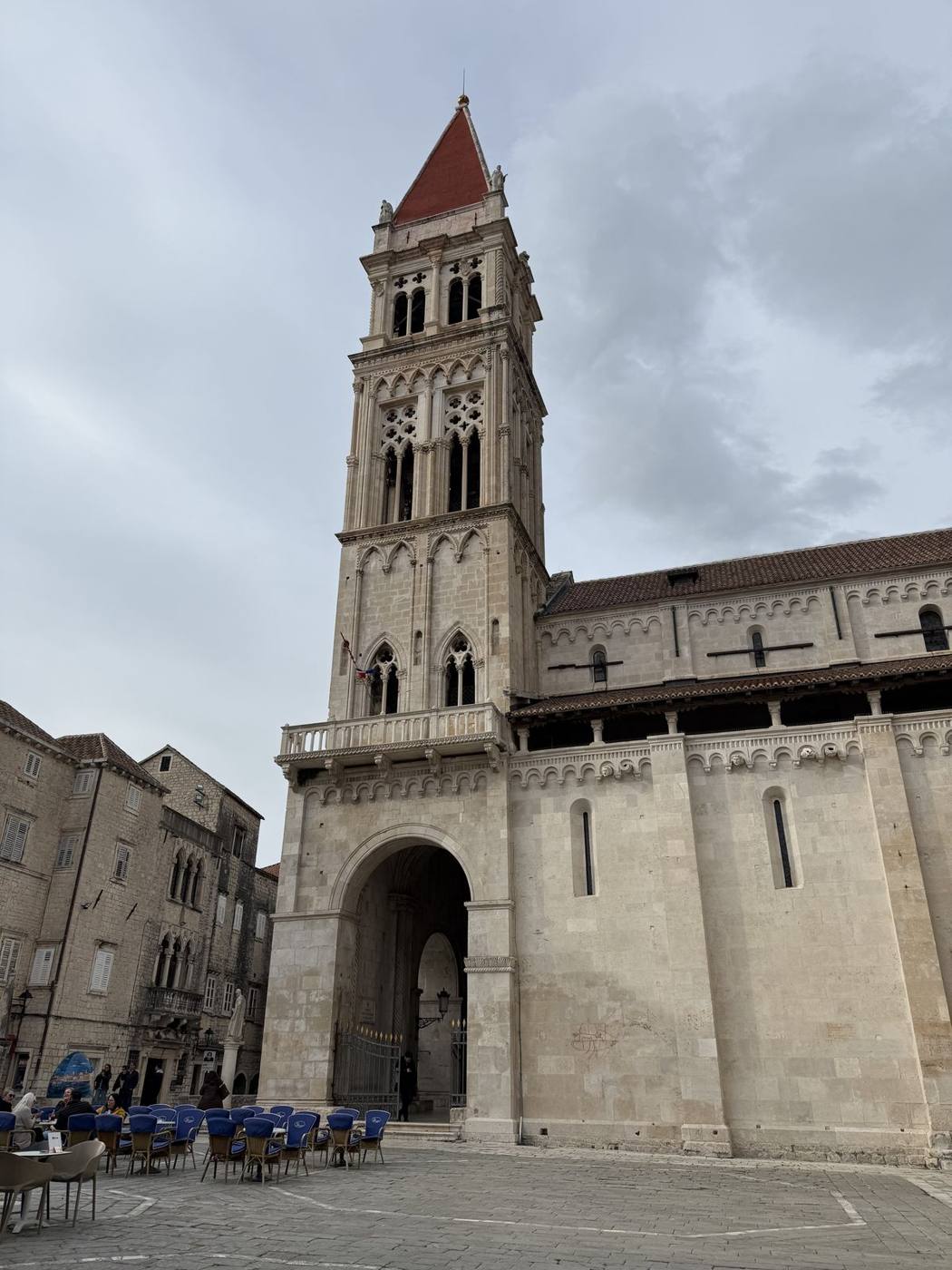
About half an hour up the coast from Split, Trogir sits on a tiny island linked to the mainland by bridges. The whole old town is a UNESCO World Heritage Site, and it feels like stepping into a stone maze. The lanes are so narrow you can nearly touch both walls, shutters are painted green and blue, and the stones underfoot have been worn smooth over centuries.
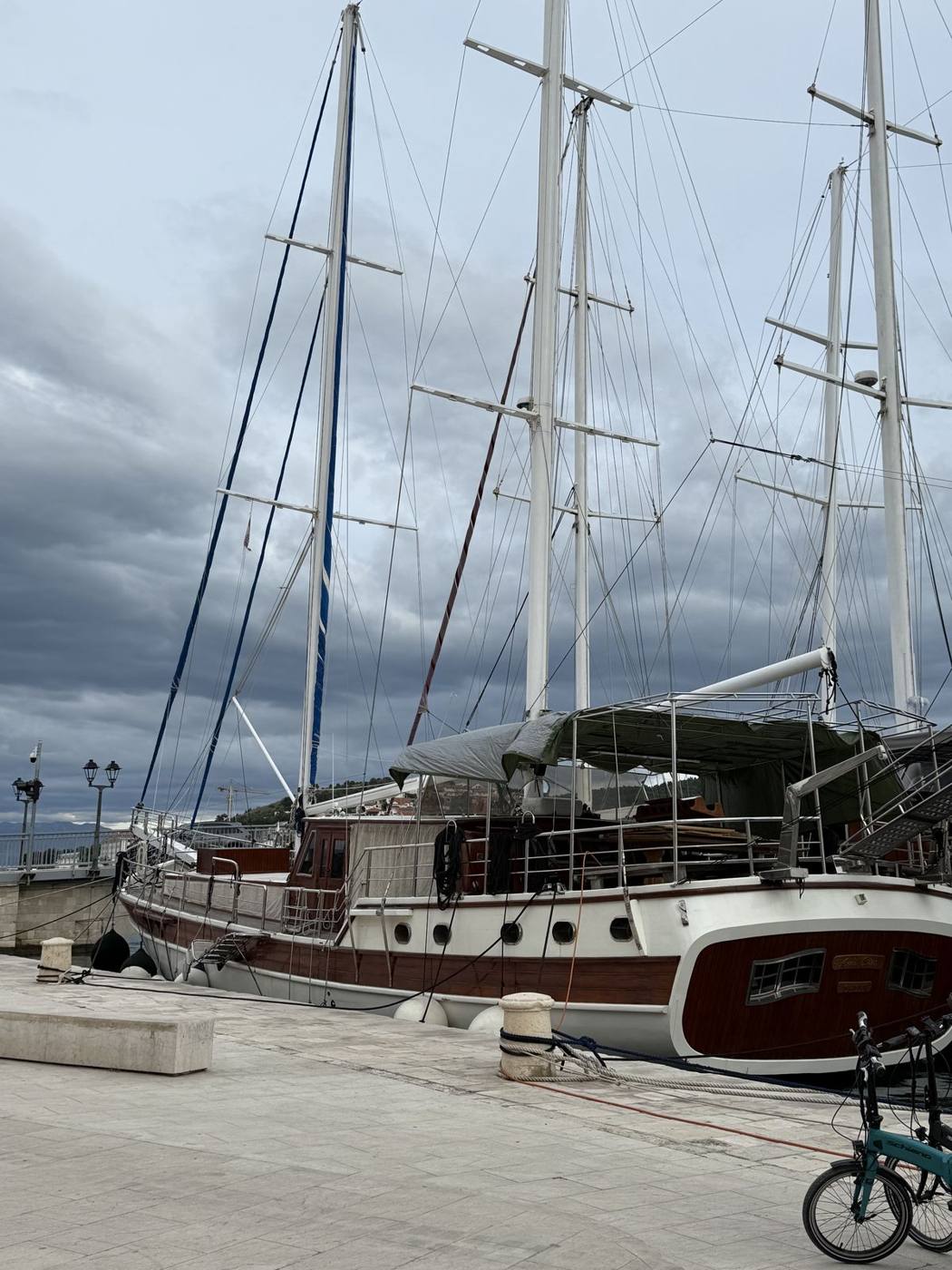
We wandered past the Romanesque doorway of the Cathedral of St. Lawrence, looked up at the painted ceiling of the old Town Loggia, and walked out to the Kamerlengo Fortress, whose square tower still guards the end of the waterfront. We stopped for drinks at Corte Bar, at a table out on the main square, and just watched the town go by. Lunch was at 2Point, right on the water along the promenade: fresh grilled fish and a Greek salad, with tall-masted sailing ships tied up just a few steps away. It’s an easy, relaxed half day that’s well worth adding to any Split itinerary.
Day 4: The drive from Split to Dubrovnik, and a winery with a view
There are a few ways to get from Split to Dubrovnik: the bus, a ferry, or a flight with connections. Instead, we booked a private car service, and it turned travel day into one of the best days of the trip. The road hugs the Dalmatian coast the whole way, and our driver pulled over wherever the view called for it: little harbor towns tucked under steep gray mountains, and turquoise bays with fishing boats bobbing at anchor.
About halfway down the coast we stopped at Rizman Winery in Komarna, a family-run organic winery that a study of thousands of reviews ranked Europe’s most beautiful vineyard. One look from the terrace and you’ll understand why. Rows of vines tumble down the hillside toward the sea, and a string of small islands floats on the horizon. We sat outside with a glass of their rosé and a board of local cheese, prosciutto and olive oil, and nobody was in any hurry to leave.
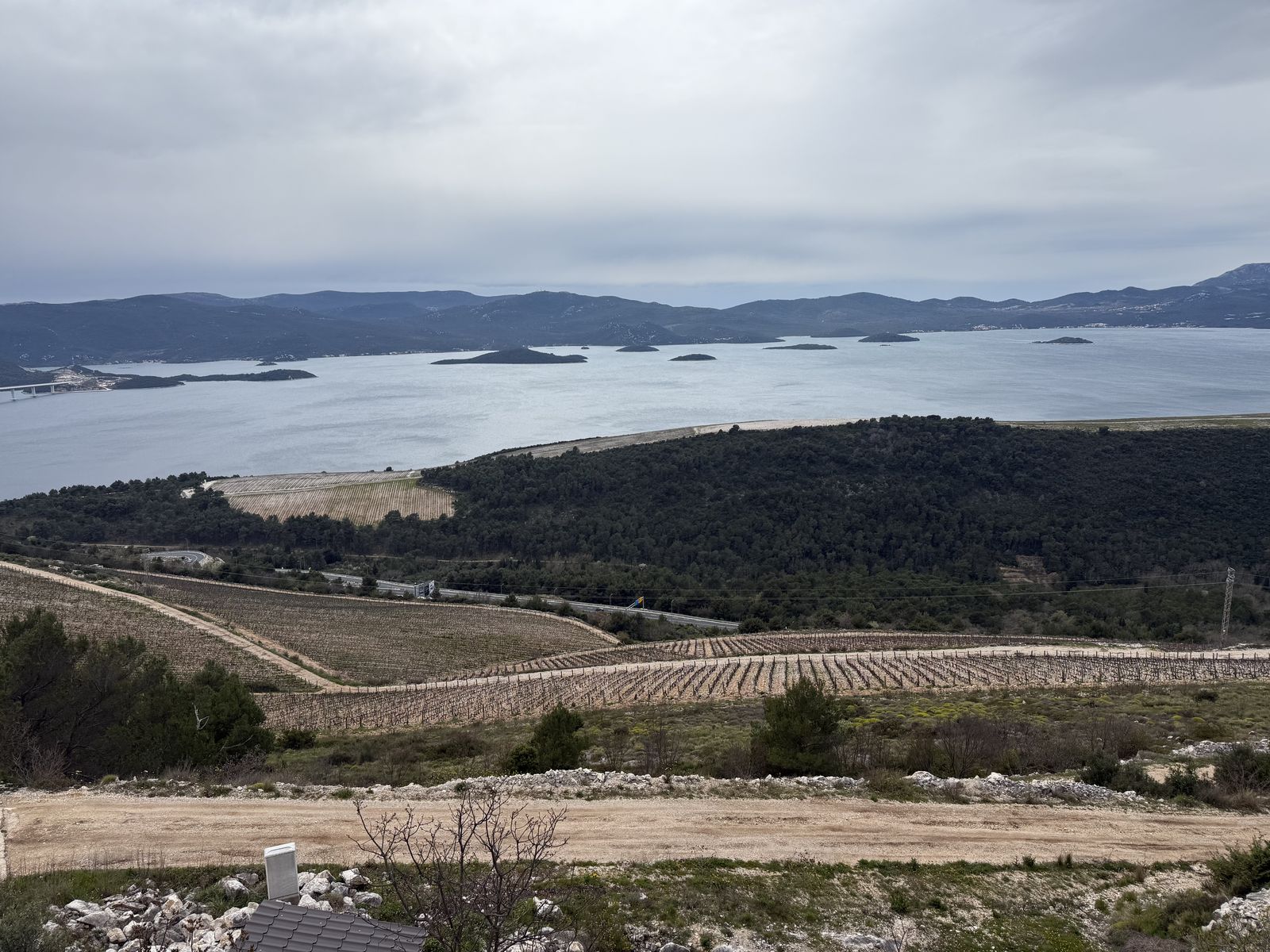
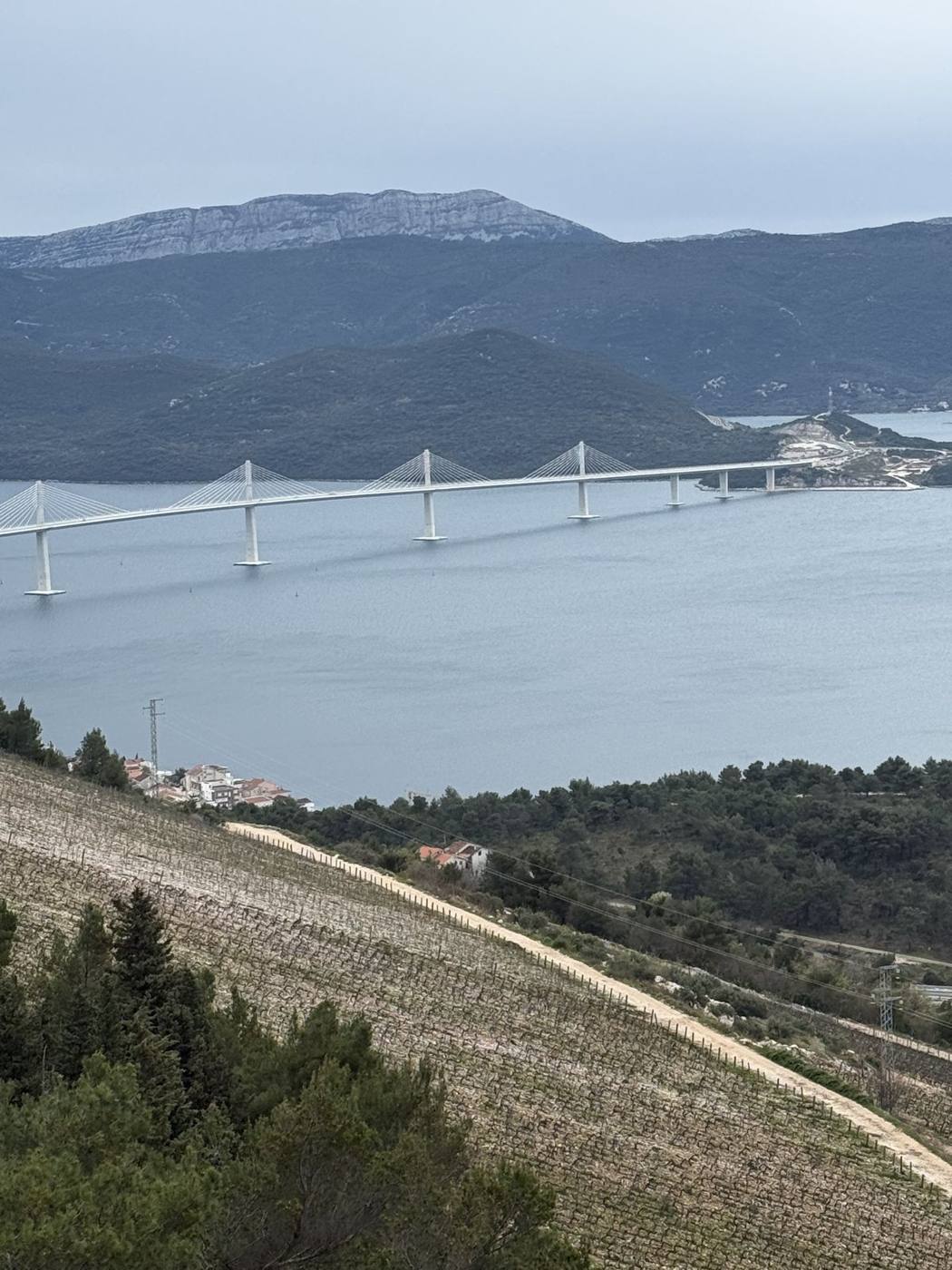
Right below the winery is the new Pelješac Bridge, sweeping across the bay. It lets you stay in Croatia the whole way instead of crossing the short stretch of Bosnia and Herzegovina coastline at Neum, which means no border lines on the way to Dubrovnik.
Days 4–7: Dubrovnik, the Pearl of the Adriatic
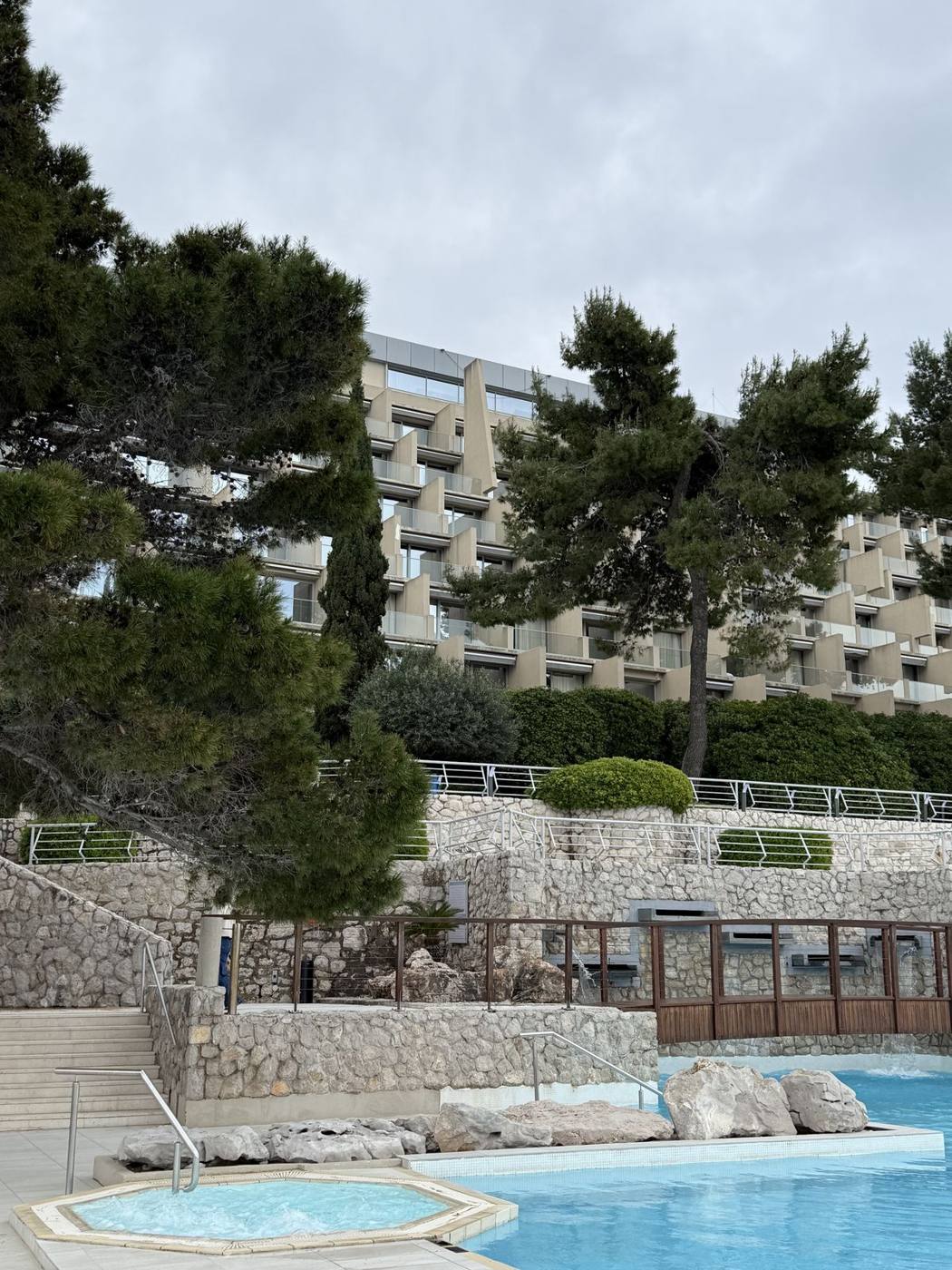
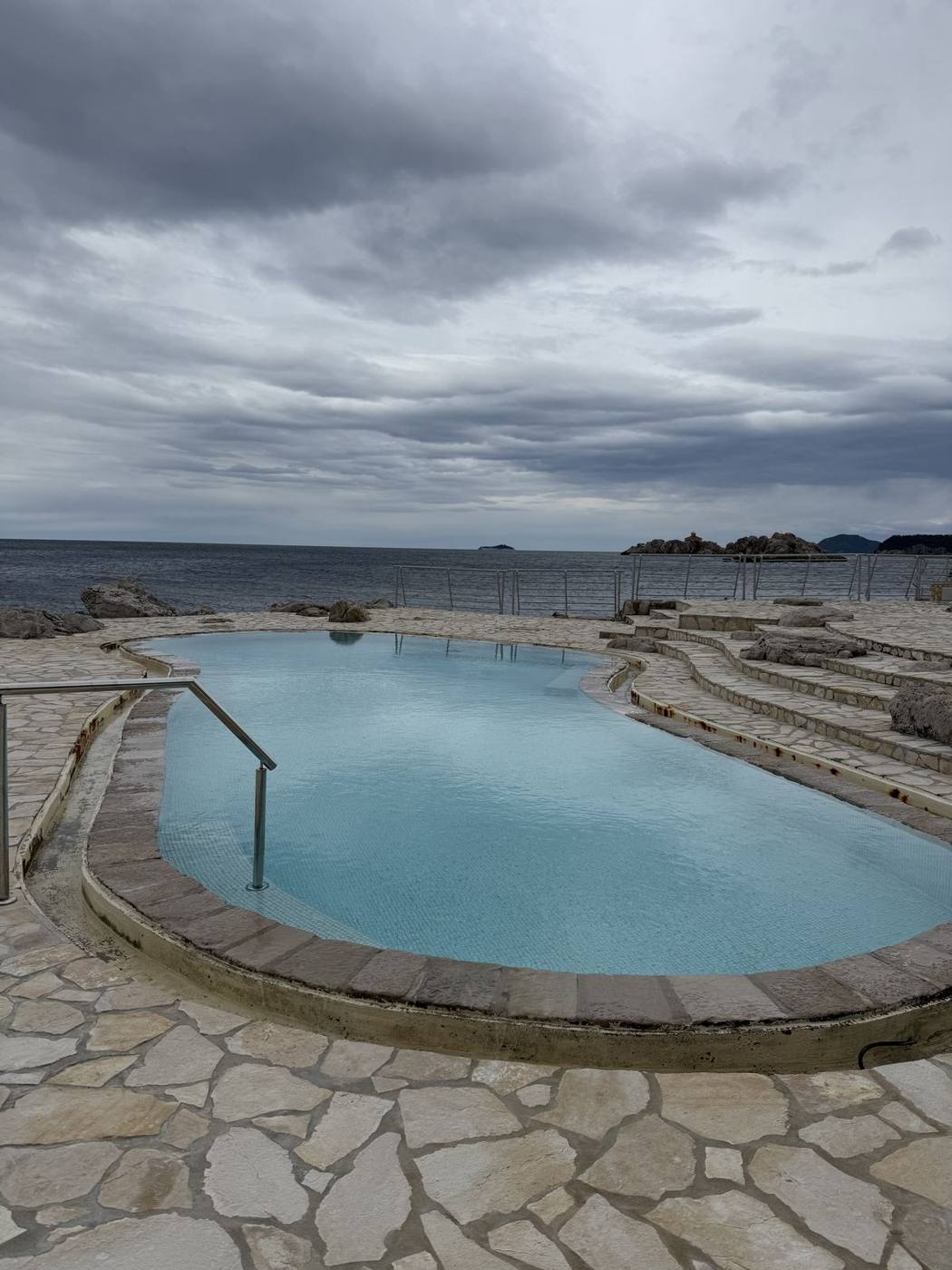
In Dubrovnik we stayed at the Dubrovnik Palace Hotel out on the Lapad peninsula, with pine trees, sea-view balconies and pools set right into the rocks above the water. It gave us a calm place to come home to each night, and a city bus runs straight to the Old Town’s Pile Gate.
Walking Dubrovnik’s city walls
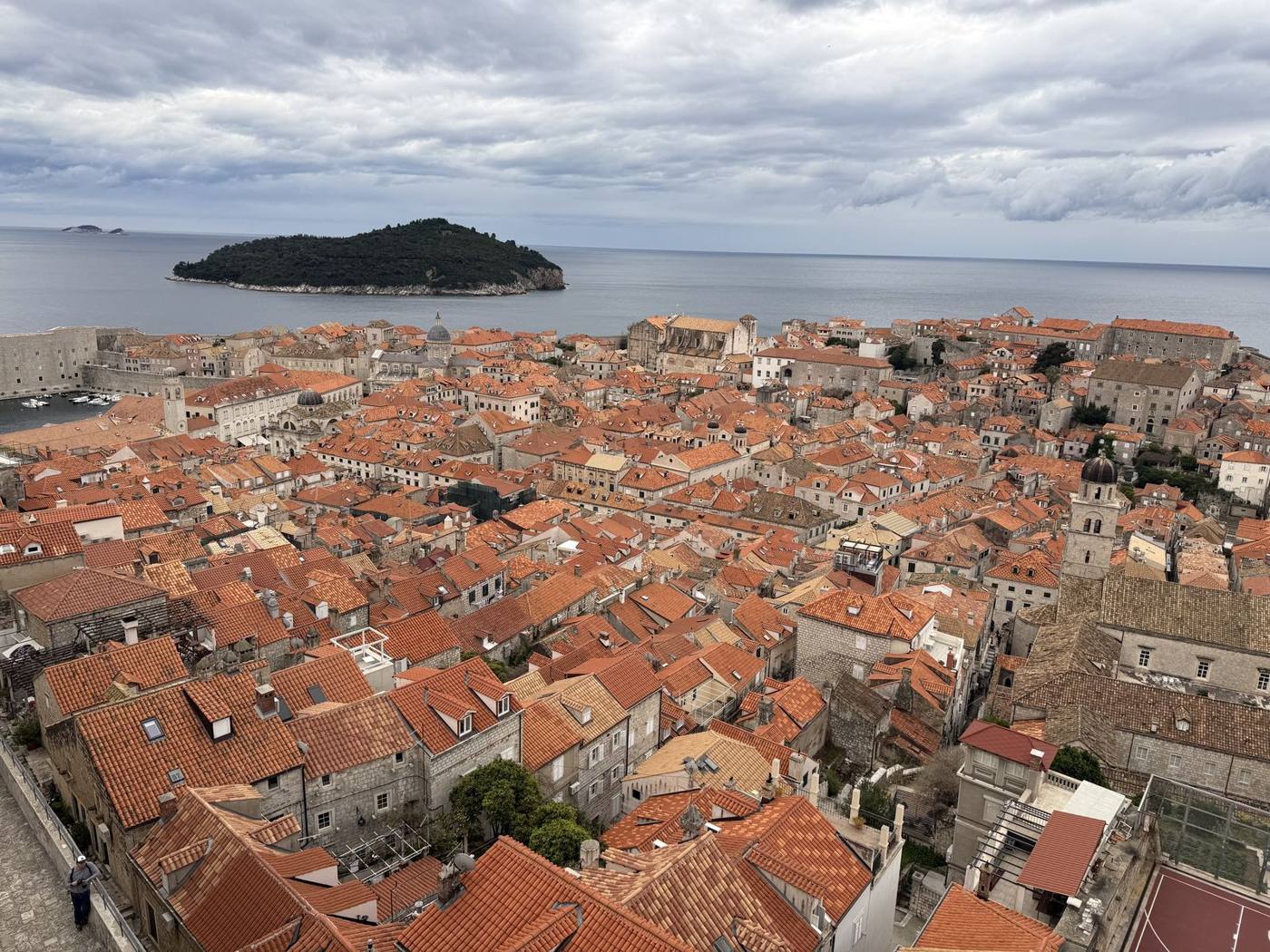
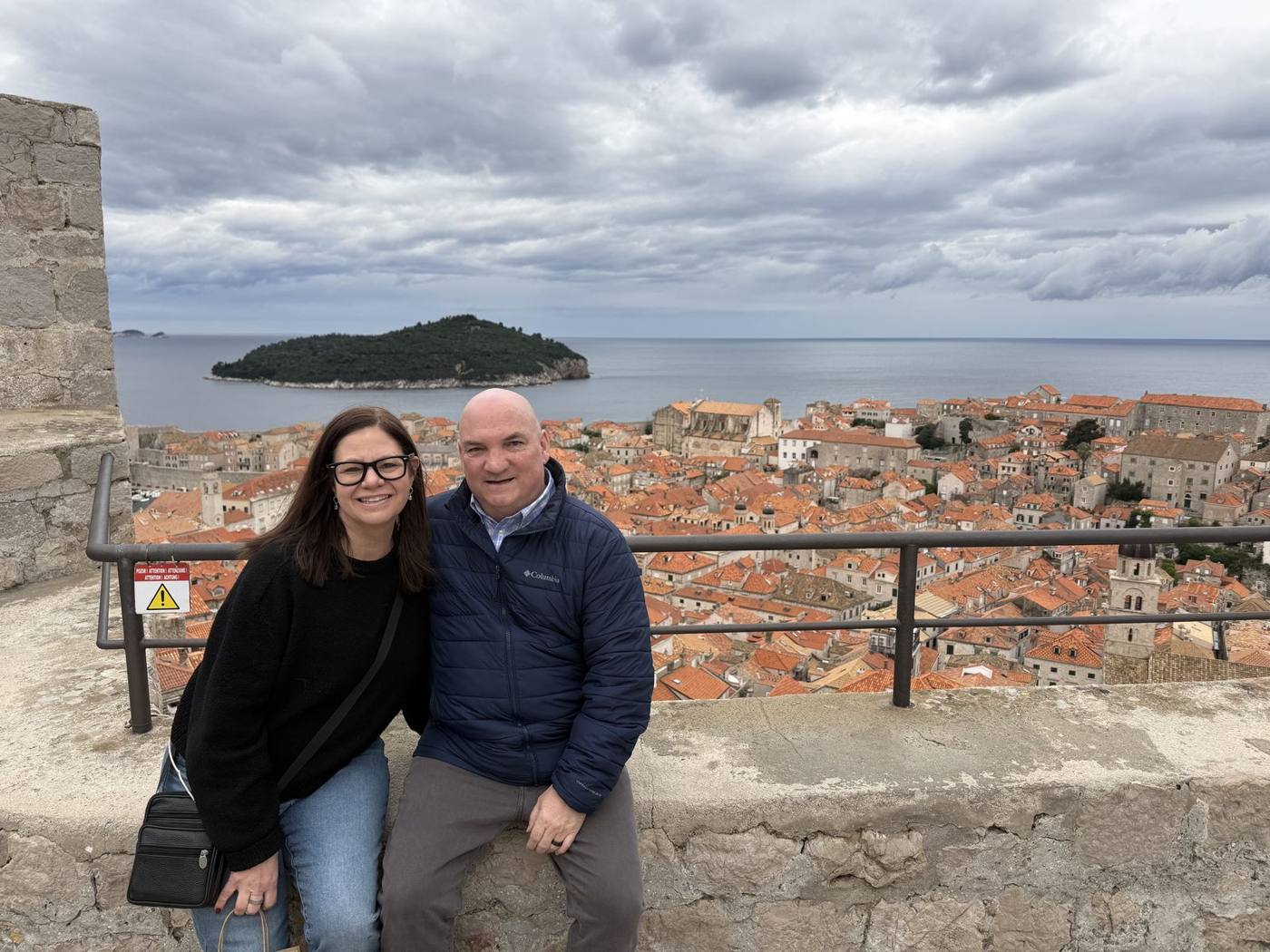
If you do one thing in Dubrovnik, walk the city walls. The loop runs all the way around the Old Town, and every few steps the view changes. On one side, a sea of terracotta rooftops, church domes and tiny hidden gardens. On the other, the open Adriatic crashing against the rocks below, with the green island of Lokrum floating just offshore. Bring water and comfortable shoes. There are plenty of stairs, and you’ll want to stop for photos every few minutes.
The Old Town’s lanes, cloisters and hidden corners
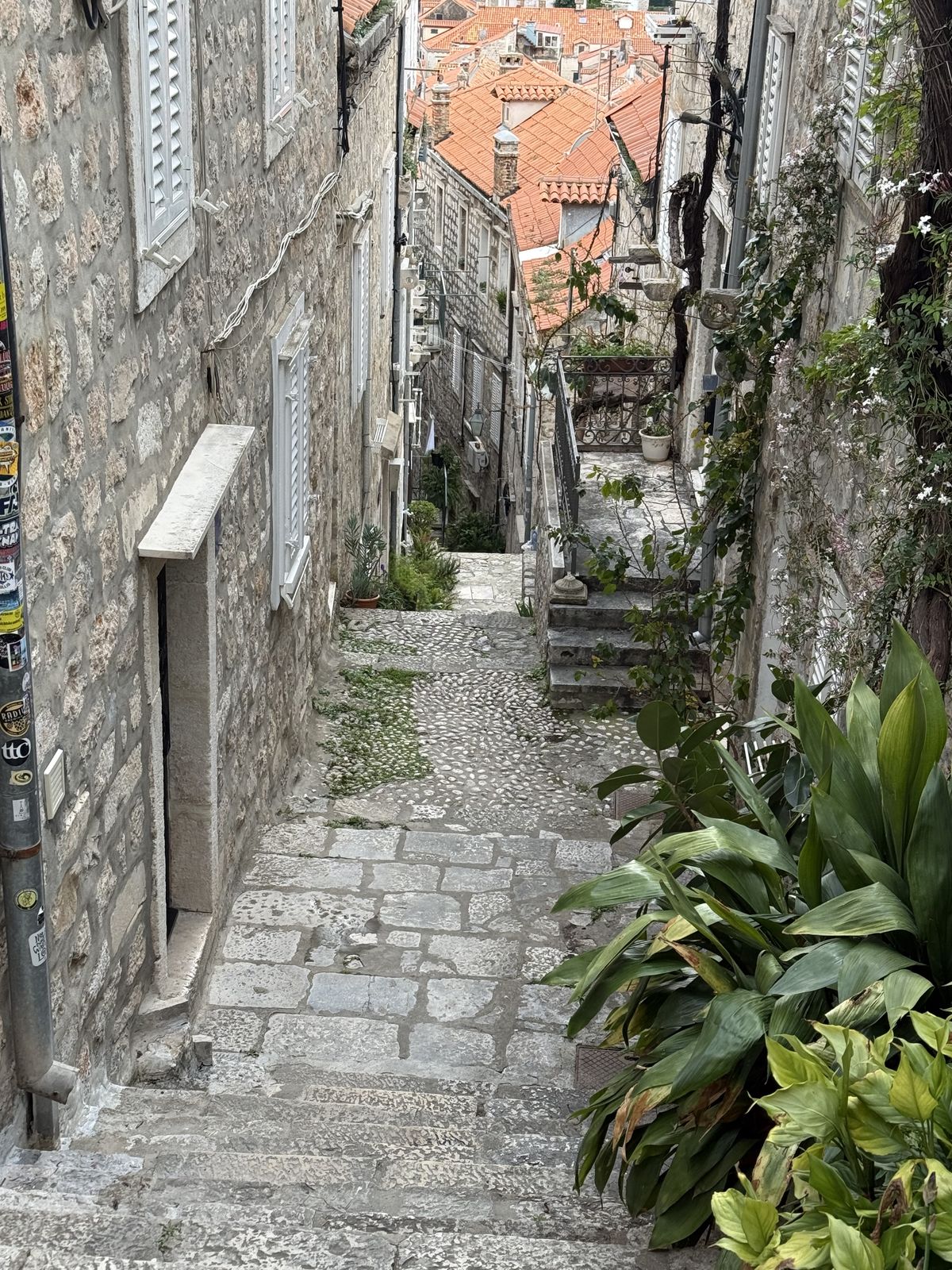
Our guided walking tour was the perfect first afternoon. Our guide brought the city’s history to life as we followed the Stradun, Dubrovnik’s limestone main street polished to a shine by centuries of footsteps. After that, we had plenty of free time to explore on our own. We climbed steep stone stairways lined with potted plants, and watched clouds of pigeons scatter across the squares.
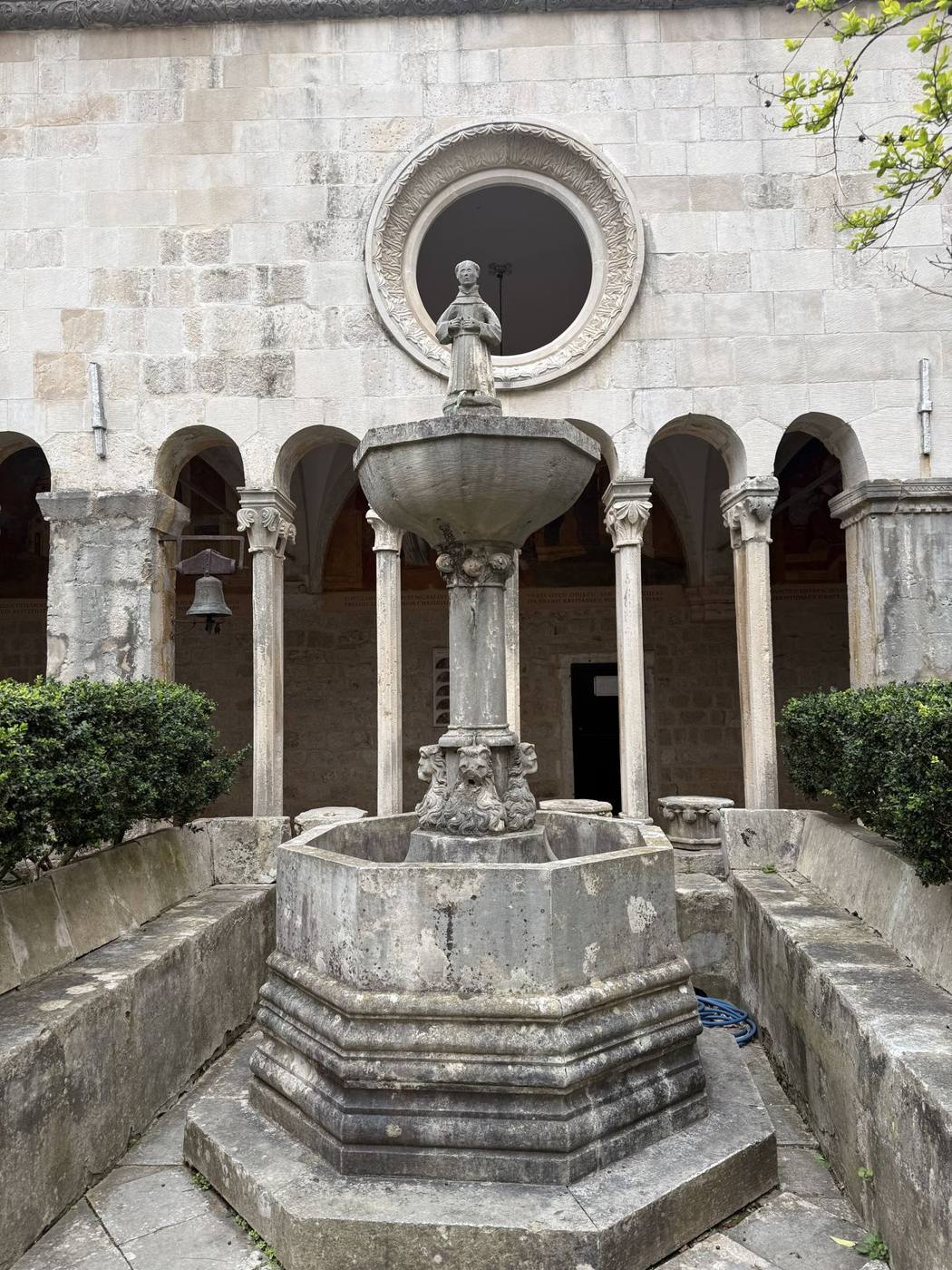
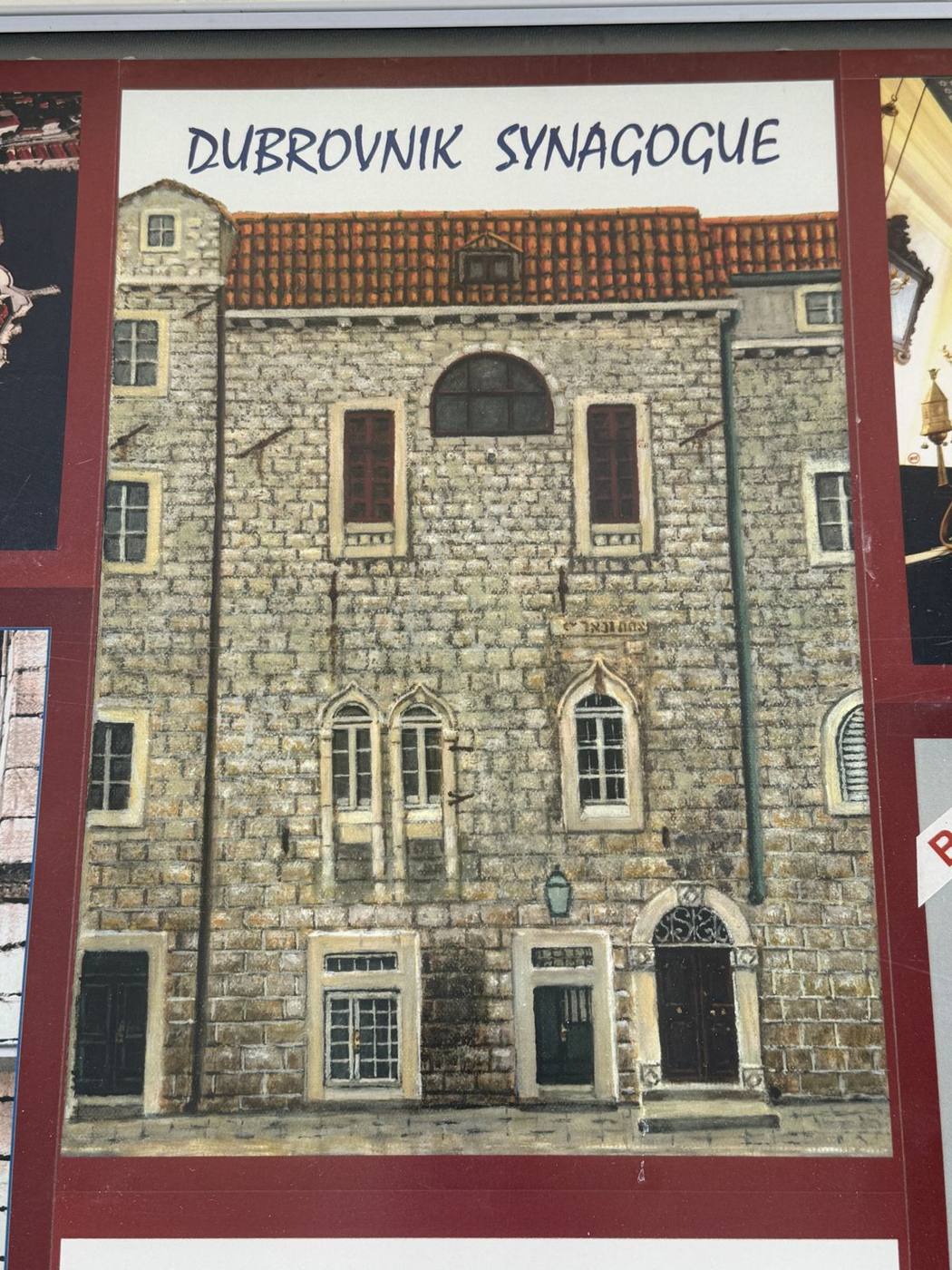
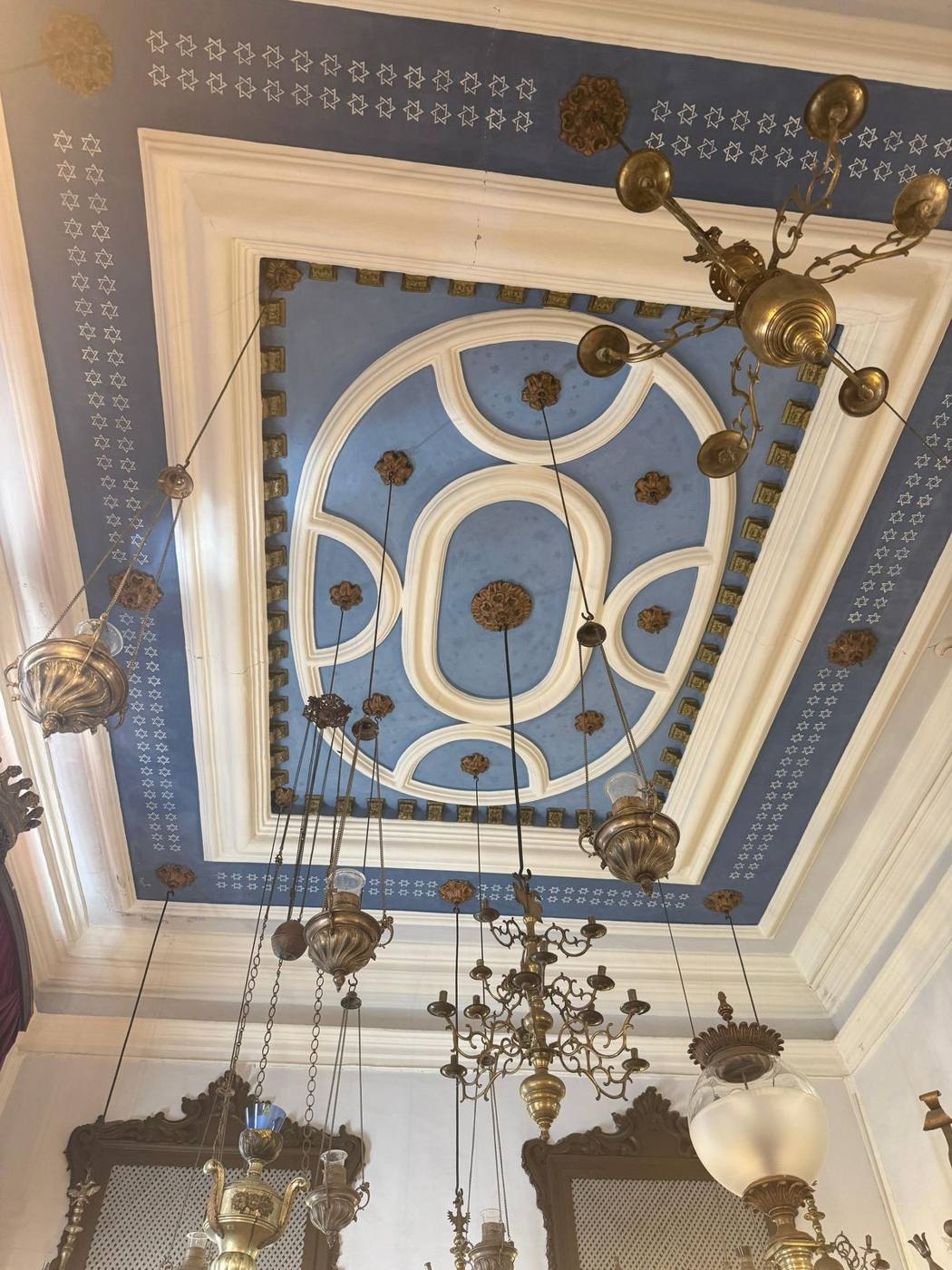
Two places stuck with us. The Franciscan Monastery has a peaceful cloister garden ringed by carved columns, and it’s home to one of the oldest working pharmacies in Europe. And on a narrow lane just off the Stradun, up a flight of stairs you could easily walk past, is the Dubrovnik Synagogue, one of the oldest synagogues in Europe still in use. Step inside and the noise of the street disappears. Brass lamps hang from a sky-blue painted ceiling, and the dark carved woodwork glows in the light from the windows. It’s easy to miss, and that’s exactly why we love sending people there.
Seeing the fortresses from the water
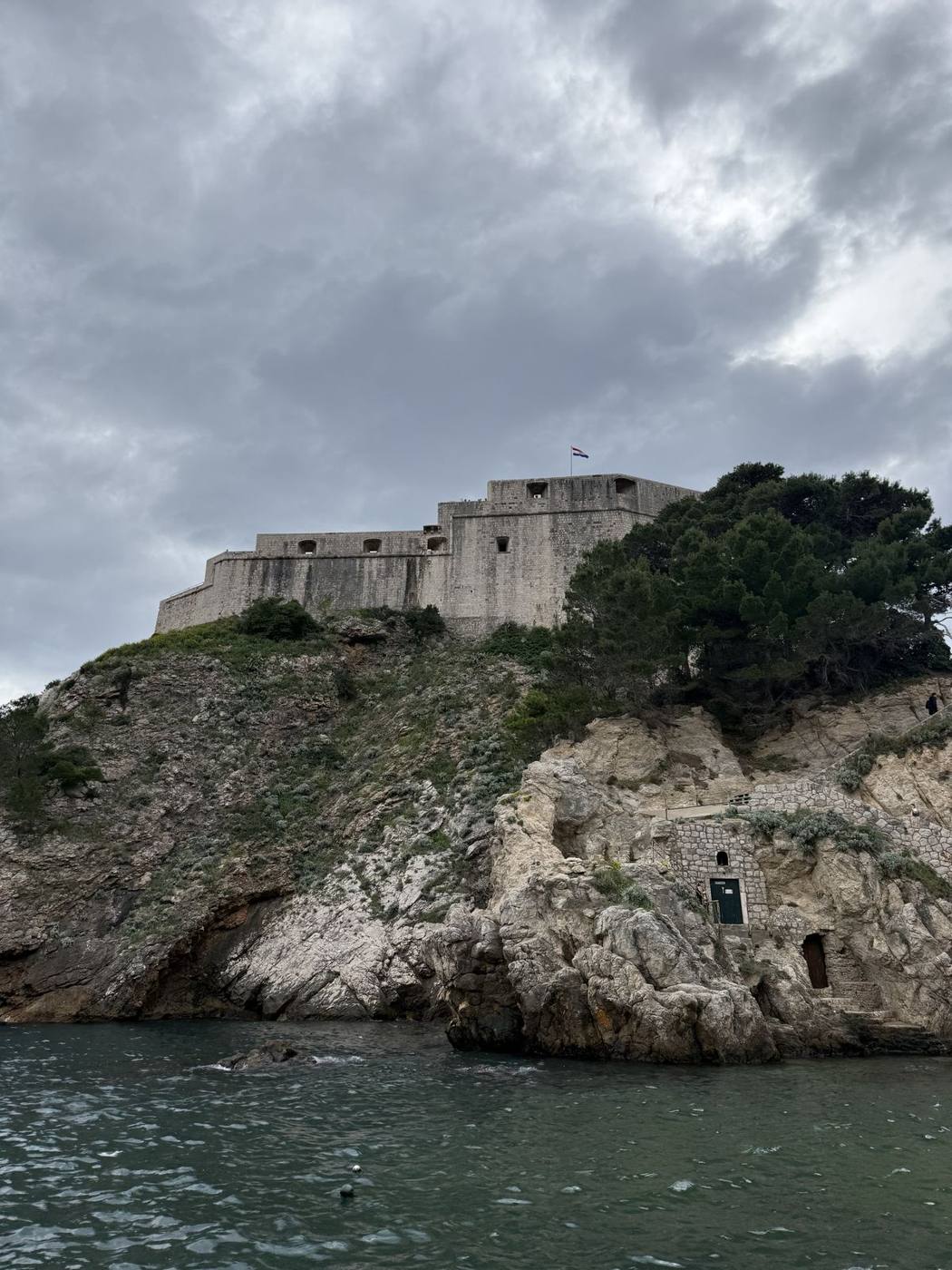
Dubrovnik looks completely different from the sea. Out on the water, you look up at Fort Lovrijenac, perched on its sheer rock cliff just outside the walls, and at the round Bokar Fortress, standing guard at the water’s edge. Waves slap against the stone, gulls wheel overhead, and you finally get a sense of how this little city held its own for centuries.
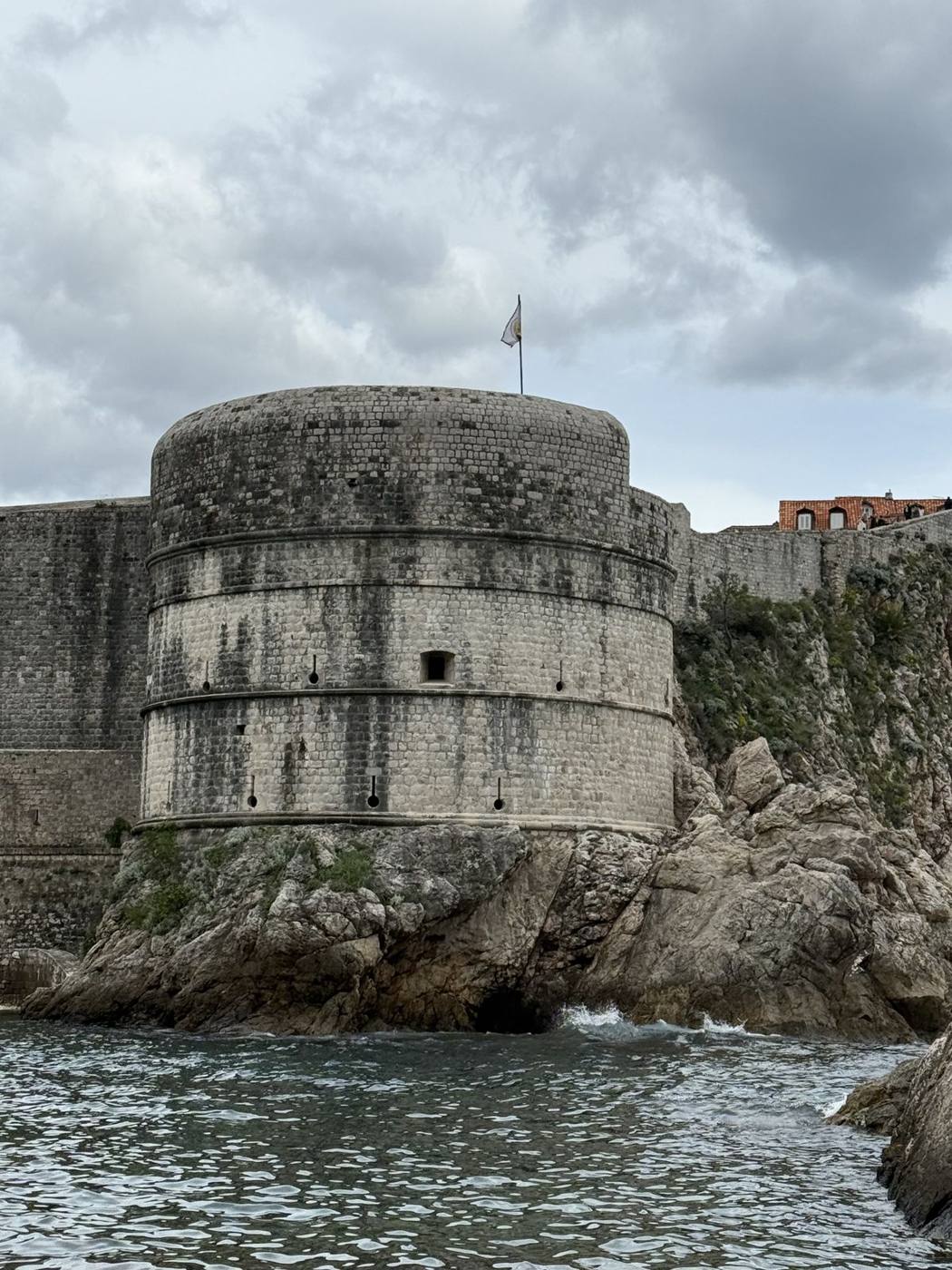
The view from Mount Srđ
For the view everyone remembers, ride the cable car up Mount Srđ. In just a few minutes the Old Town shrinks below you into a perfect walled oval of red roofs, the harbor full of tiny boats, and Lokrum sitting in a blue sea that stretches all the way to the horizon. Turn around and the other side is just as striking, with rolling hills and snow-capped peaks heading inland. Go late in the afternoon, grab a drink at the terrace and stay for the light.
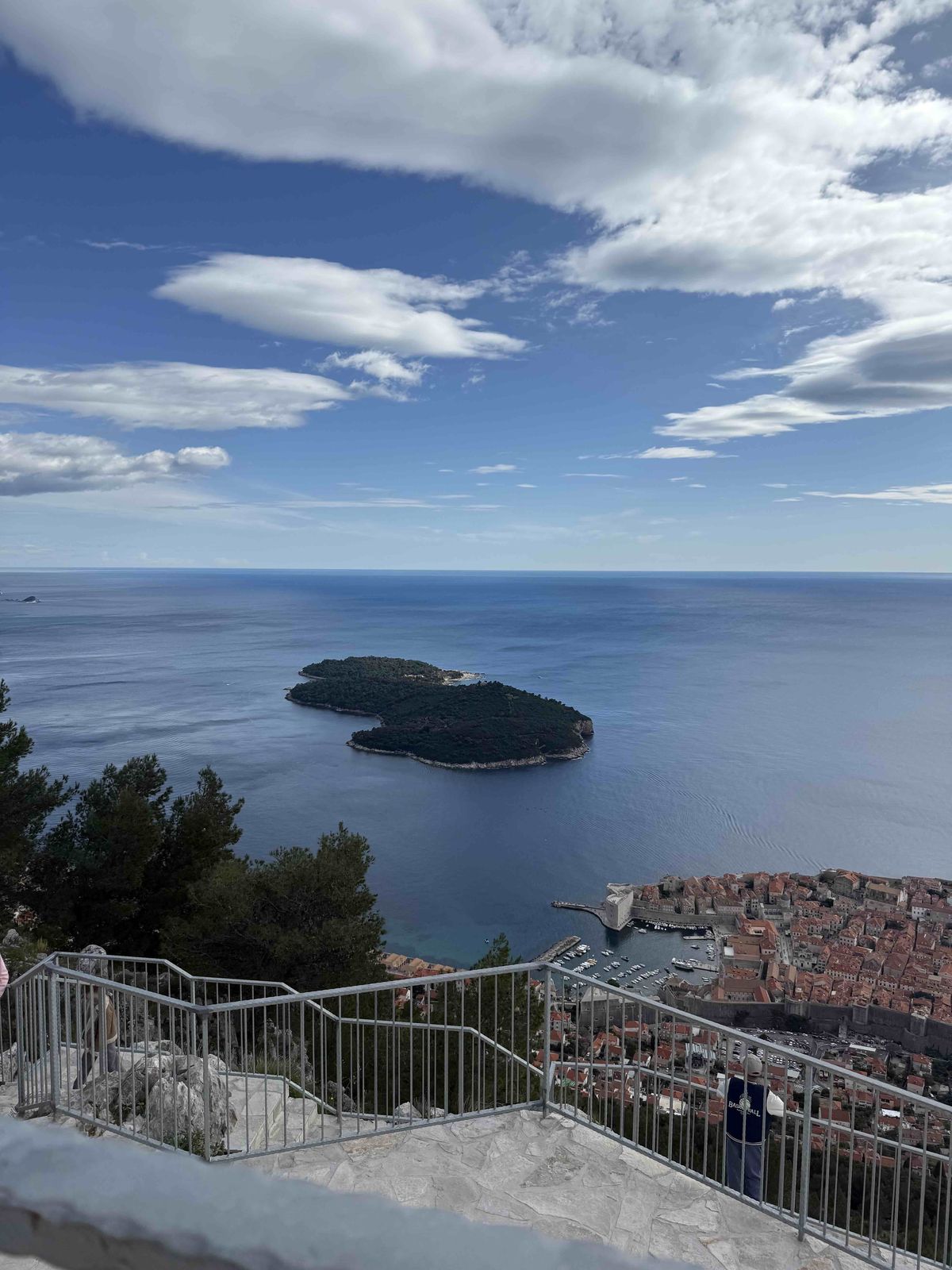
Dubrovnik after dark
When the day-trippers leave, Dubrovnik becomes a different city. The limestone glows gold under the streetlights, and the Stradun gleams like it’s been polished. Church bells echo off the walls. We had one of the most romantic dinners of our lives on the terrace at Nautika, just outside Pile Gate. Then we walked home past the floodlit Church of St. Blaise, the city’s patron saint, feeling like we had the place to ourselves.
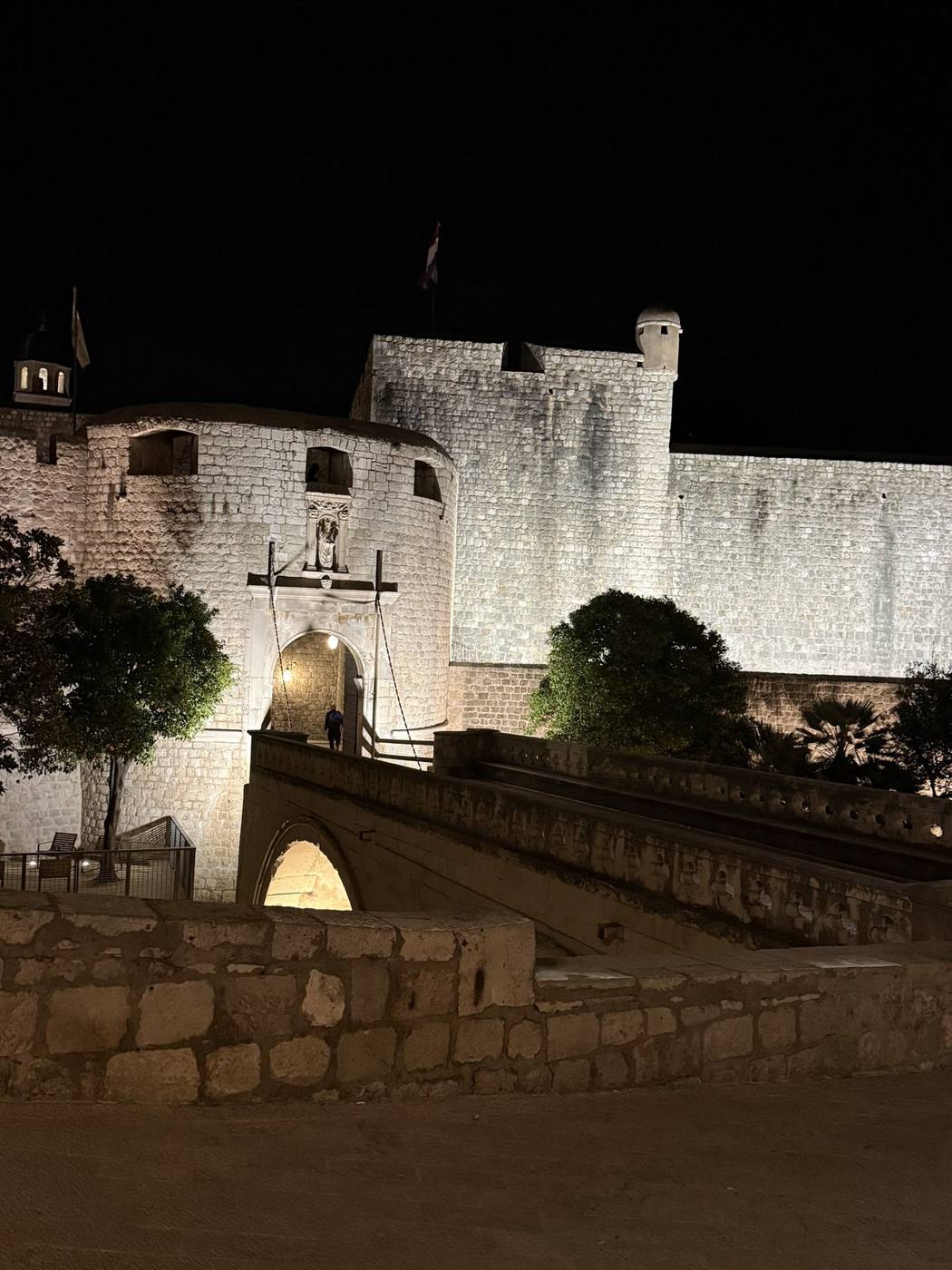
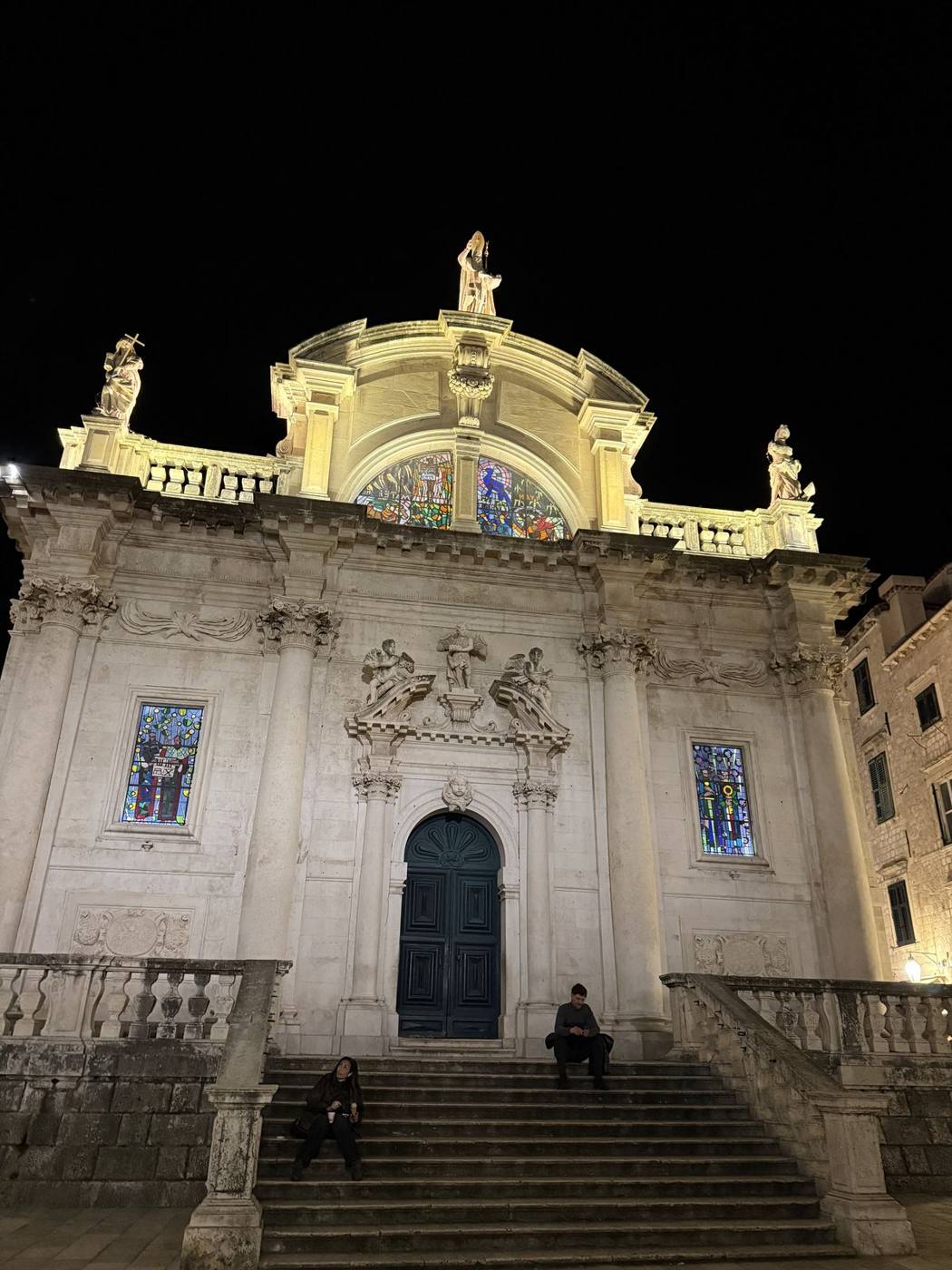
In Mikki’s words
“Because of my husband’s travel experience, this trip of a lifetime came to life.”
Why this Croatia itinerary worked
- The right hotel in the right neighborhood. In Split we could walk everywhere. In Dubrovnik we had a quiet seaside retreat with an easy ride into the Old Town.
- A scenic transfer instead of a long bus ride. The private car turned a travel day into a highlight, with a winery lunch and photo stops along the way.
- Enough free time to explore. One guided tour gave us the history. Unscheduled afternoons gave us the moments we still talk about.
Croatia travel tips from this trip
- Go in shoulder season. We traveled in early spring, when the streets were calm and the weather was jacket-and-sunglasses. For warmer seas without the summer crowds, May, June and September are the sweet spot.
- Wear real walking shoes. Between Split’s hills, Trogir’s lanes and Dubrovnik’s walls, our watches regularly logged more than ten miles a day. Polished limestone can be slippery, too.
- Look into the Dubrovnik Pass. It bundles the city walls with several museums and local buses, and it can save money if you plan to see a lot.
- Walk the walls early or late. Mornings and late afternoons are cooler, and the light on the rooftops is at its best.
- Make the transfer part of the trip. A private driver between Split and Dubrovnik costs more than the bus, but you get a full day of scenery and stops, plus door-to-door service with your luggage.
More photos from our trip
Select any photo to see it larger.
Troy and Mikki on Mount Srđ
Among the olive trees at Rizman
The Old Port below the walls
The Adriatic from Marjan Hill
The painted ceiling of Trogir’s Town Loggia
Franciscan Monastery cloister, Dubrovnik
A cannon on Fort Lovrijenac
Dinner at Nautika, just outside Pile Gate
The view inland from Mount Srđ
Frequently asked questions
How many days do you need in Croatia?
Seven days is a great first trip. It gives you about three days in Split, including a day trip to Trogir, a scenic transfer down the coast, and about four days in Dubrovnik. With 10 to 14 days, you can add islands like Hvar or Korčula, or a visit to Plitvice Lakes.
What’s the best way to get from Split to Dubrovnik?
For couples and families, we like a private car transfer. It’s door to door, you can stop for lunch or a winery visit along the way, and the coastal drive itself is beautiful. Buses and seasonal ferries are cheaper options if you’re traveling light.
Is Croatia good for a first trip to Europe?
Yes. It’s safe, easy to get around, and English is widely spoken in tourist areas. It mixes history, beaches, great food and wine in a compact area. It’s also a favorite for anniversaries, honeymoons and milestone trips.
Thinking about Croatia? We’d love to help you plan your own version of this trip, from the hotels and private transfers to the tours, the wineries and the free time in between.