Weather figures are long-term averages, and entry rules were checked on October 25, 2026. I’ll keep this post current as the EU’s new entry systems roll out.
Picture the Roman Forum at two in the afternoon in July. It’s 90 degrees, there’s no shade, the line for the Colosseum wraps around the block, and the person next to you is fanning themselves with a map. You came for 2,000 years of history. You’re mostly thinking about air conditioning.
Now picture the same spot on a morning in late April. It’s in the upper 60s, the light is soft, and you can actually stop and read the stones.
If your perfect day is a fortress, a cathedral, a market and a long lunch, not eight hours on a lounger, early April through May is the sweet spot for Europe and the Mediterranean. Here’s why, and the honest trade-offs.
Who this is for (and who it isn’t)
This is for you if you’d rather walk a city wall than work on a tan. You want to see the ruins, the old towns, the churches and the museums, and you want to enjoy them without heat and crowds wearing you down.
It isn’t for you if the trip is really about the beach. The Mediterranean is still cool in spring. If swimming every afternoon is the point, plan for late June through September instead.
Reason 1: The weather is made for walking
History trips are walking trips. Old towns are hilly, the best sites are outdoors, and you’ll often cover five or six miles a day. Spring gives you weather you can do that in.
| City | April | May | July |
|---|---|---|---|
| Rome | about 66°F | about 74°F | about 87°F |
| Athens | about 68°F | about 77°F | about 92°F |
| Dubrovnik | about 64°F | about 73°F | about 85°F |
Long-term average daytime highs, rounded. Any given week can run warmer or cooler.
Those July numbers are averages. Heat waves in recent summers have pushed southern Europe well past 100°F, and Athens has closed the Acropolis during the hottest hours of the day. In spring that’s rarely a concern.
Reason 2: Fewer crowds at the places you came to see
Summer is when much of Europe takes its own holidays and cruise traffic peaks. In April and May the big sites are calmer, especially on weekdays and first thing in the morning. You can stand in a cloister and hear the fountain, and the guide on your walking tour isn’t shouting over three other groups.
You’ll also find more choice. The hotel with the view, the restaurant with six tables and the private guide everyone recommends are much easier to get in spring than in July.
Reason 3: Better value for the same trip
Hotel rates in most of southern Europe climb through June and peak in July and August. In April and May you’ll often find the same room for noticeably less, or a better room for the same money. Transatlantic fares are often lower in April and early May than in June through August, too.
That’s the same idea I write about all the time: put the money where it changes the trip. A view over the old town, a private guide for your one big day, or a car and driver between cities instead of a bus.
Reason 4: Long, light evenings
By mid-May the sun sets after 8 p.m. in Rome, Athens and Dubrovnik. That gives you a full day of sightseeing, then dinner outside while it’s still light, then a walk through an old town after the day-trippers have gone. That last part is one of my favorite things about travel.
What it was like for us: Croatia in April
Mikki and I spent a week in Split, Trogir and Dubrovnik in April 2026. It was exactly the trip I’m describing.
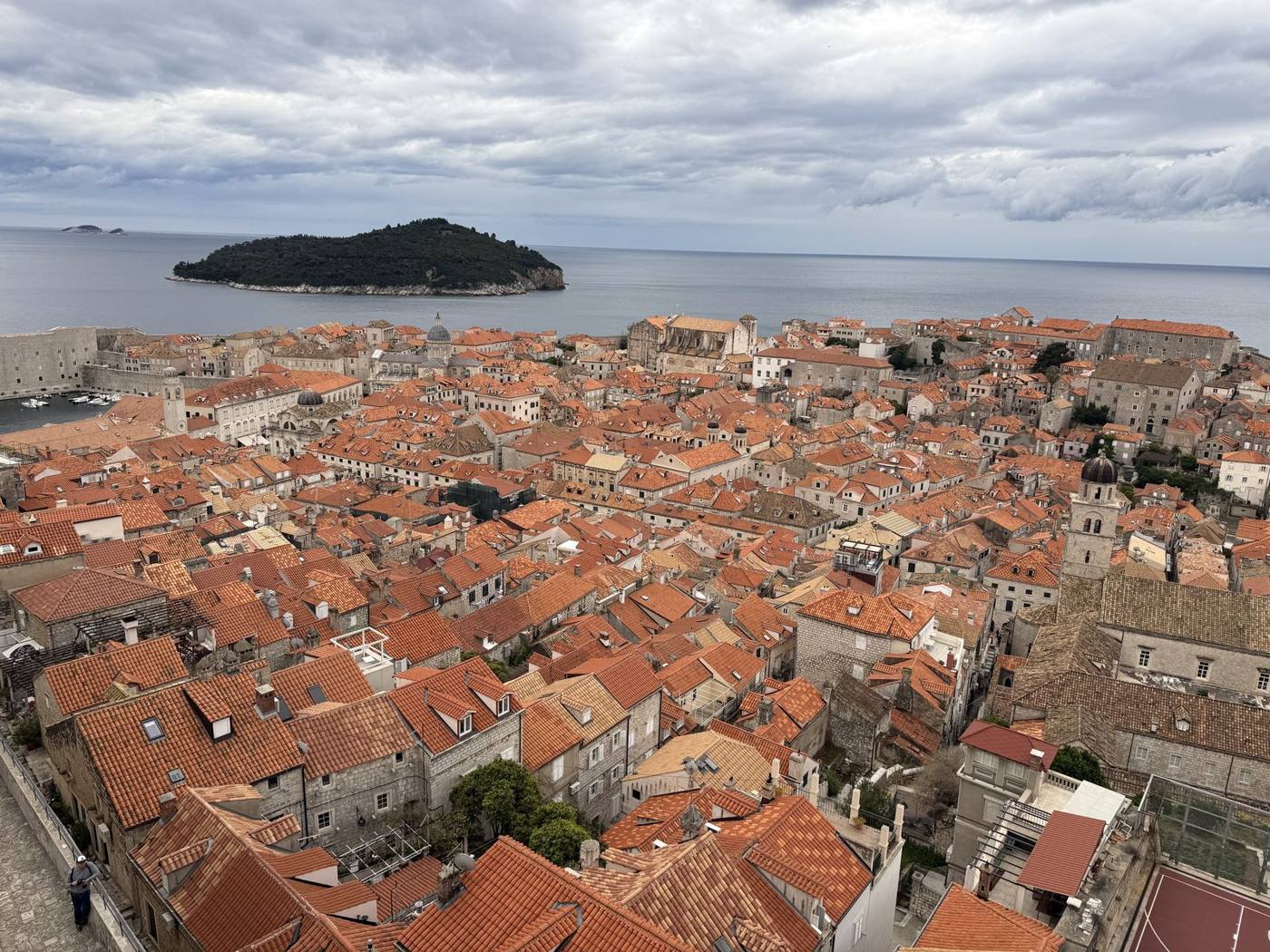
We wandered Diocletian’s Palace in Split, a 1,700-year-old Roman palace the city grew up inside. From Marjan Hill there was still snow on the mountains behind the city. In Dubrovnik we walked the city walls, toured the Franciscan cloister and the old synagogue, and rode the cable car up Mount Srđ for the view over the Old Town and Lokrum Island.
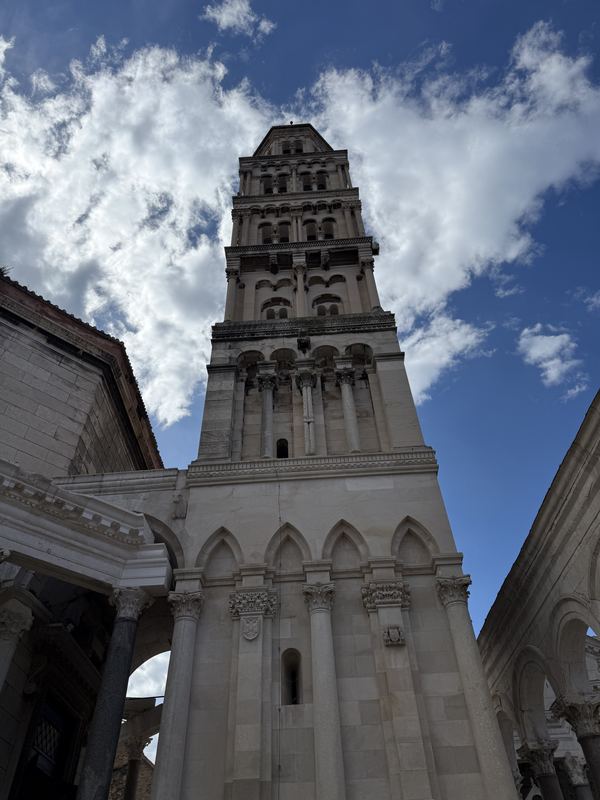
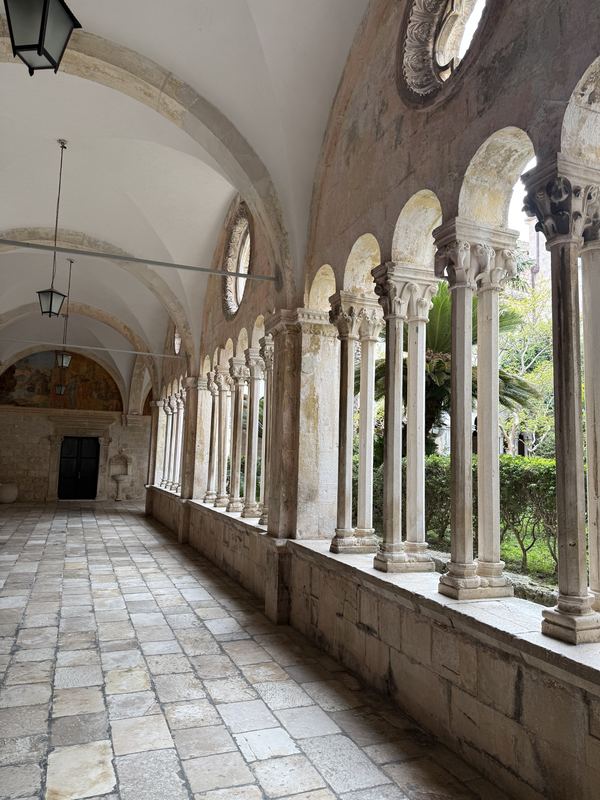
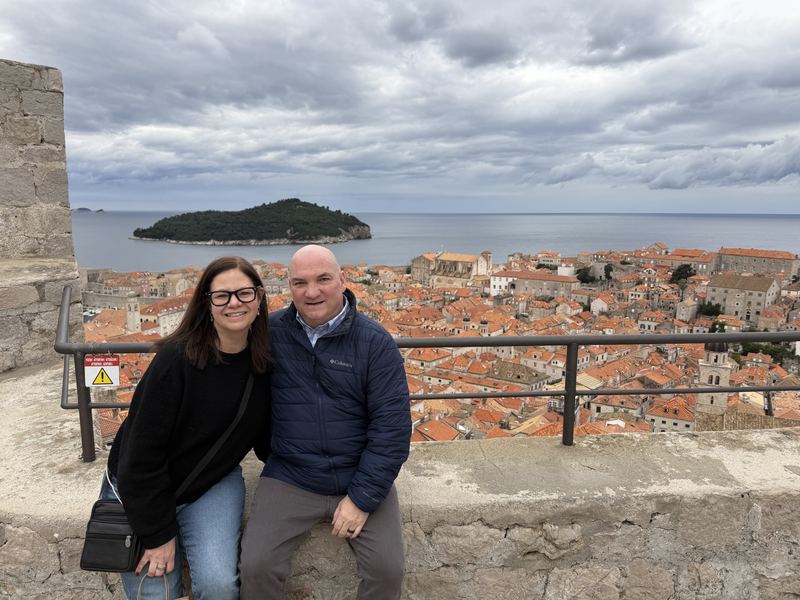
You can see the whole week, day by day, in our 7-day Croatia itinerary.
The honest trade-offs
Spring isn’t perfect. Here’s what I tell clients before they book.
- The sea is cold. In Dubrovnik the water averages about 60°F in April and 66°F in May, compared with about 78°F in August. A quick, bracing swim in late May, sure. Lazy afternoons in the water, no.
- Pack layers and a rain jacket. Mornings and evenings can be cool, especially in April, and you’ll get the odd rainy day.
- Some island and beach services run lighter schedules. Ferries, boat trips and beach clubs often ramp up toward summer. That matters more for island-hopping than for city-based history trips.
- Watch the holidays. Easter 2027 is March 28, and Holy Week is busy in Rome and across Spain and Italy. Greek Orthodox Easter is May 2, 2027. It’s a wonderful time to be in Greece, but plan around closures and book early. Many countries also close for May 1, and Italy marks Liberation Day on April 25.
Where history lovers should look
- Rome and Florence: ancient Rome, the Vatican and Renaissance Florence, with a day in Tuscany. Late April and May are ideal, once Easter crowds have gone.
- Athens and the Peloponnese: the Acropolis before the heat, a day trip to Delphi, then Mycenae, Olympia and Nafplio in the Peloponnese by car.
- Croatia’s Dalmatian coast: Split’s Roman palace, medieval Trogir and Dubrovnik’s walls and fortresses. Our own trip, above.
- Sicily: Greek temples at Agrigento, Roman mosaics, Norman cathedrals and Baroque towns, with spring wildflowers everywhere.
- Malta: 7,000 years of history in a country you can cross in an hour, from prehistoric temples to the Knights of St. John in Valletta.
Before you go: passports and Europe’s new entry rules
- Passport: for most of Europe’s Schengen countries, your passport should be valid at least three months beyond the day you plan to leave, and issued within the last 10 years. Check yours now. Renewals take time.
- EES: the EU’s Entry/Exit System is now fully in place. It replaces passport stamps with fingerprints and a photo, taken the first time you enter. It caused long lines at some airports this past summer, so allow extra time at the border.
- ETIAS: a planned online travel authorization for U.S. visitors to most of Europe, expected to cost €20 and last up to three years. It has been delayed several times, and as of October 2026 the EU hasn’t set a start date. It says it will announce one several months in advance. Until then there’s nothing to apply for, so ignore any website asking you to pay for one now. I’ll tell every client exactly what they need for their dates.
When to book a spring trip to Europe
Now through early winter. The best hotels in small old towns have only a handful of rooms, and private guides book up. If you have airline miles or credit card points, this is also the time to use them. Award seats for spring open up well in advance. (Here’s why I tell clients to use their points for flights.)
My planning tip: pick two or three bases, not six. Stay three or four nights in each, and use a car and driver between them. You’ll see more, unpack less and actually get to know each place.
Frequently asked questions
Is April too early for a trip to Europe?
Not for a history and city trip. Southern Europe averages the mid-60s in April, which is ideal for walking. Pack layers for cool mornings and a rain jacket. If you want warm water for swimming, wait until late June.
Is May a good time to visit Greece and Italy?
Yes. May is one of the best months for both: warm, long days with averages in the mid-70s, before the summer heat and peak crowds. Check the dates of Greek Orthodox Easter (May 2, 2027) and May 1 holidays when you plan.
Can you swim in the Mediterranean in April or May?
You can, but it is cold. Sea temperatures around Dubrovnik average about 60°F in April and 66°F in May. Most people find the water comfortable from late June.
Do Americans need ETIAS to visit Europe in 2027?
Not yet. As of October 2026 the EU has not set a start date for ETIAS and says it will announce one several months in advance. Check the official EU site before you travel, and avoid websites charging for it now. I confirm the current requirements for every client trip.
Ready to plan your trip?
Tell us who’s coming and what this trip is about. Anyone can book a room. We plan the memories.
Plan my trip Book a free call (opens in a new tab)Get our updates
New trip guides, deals worth knowing about and the best times to book, from our own trips. One short email a month, and you can unsubscribe anytime.