On a recent family trip, our 15-year-old brought along a friend, also 15. Nobody at the airport, the airline or customs ever asked to see a single piece of paper about that friend.
We had it all in a folder anyway. Here’s why, and exactly what was in it.
Why bother if nobody checks?
Because the one time someone does check, you want it in your hand. That could be an airline agent at check-in, an immigration officer in another country, or, worst case, a hospital.
U.S. Customs and Border Protection recommends a consent letter whenever a child travels without both parents. Airlines can ask for one, and some countries require it. And when you’re responsible for someone else’s child, being ready is just part of the deal.
Who needs a consent letter?
Any trip outside the U.S. where a child isn’t traveling with both parents:
- Your kid’s friend coming along on your family vacation
- Grandkids, nieces and nephews traveling with you
- One parent traveling alone with the kids
- Teams, school trips and youth groups with coaches or chaperones
This isn’t just a Dominican Republic thing or a Mexico thing. It applies anywhere you’re crossing a border with a minor who isn’t with both parents.
What was in our folder
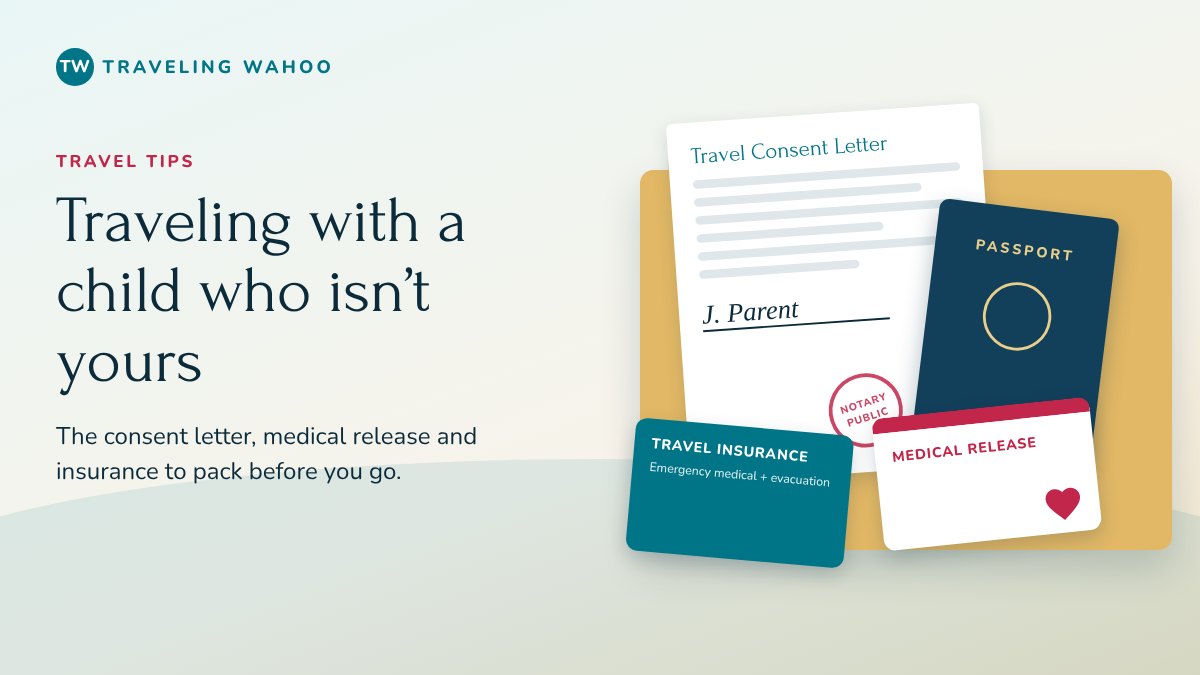
- A consent letter signed by both of the friend’s parents and notarized
- The friend’s own passport
- Copies of both parents’ IDs, so the signatures can be matched
- A copy of the friend’s birth certificate, showing who the parents are
- A signed medical release with allergies, medications, their doctor and insurance info
- Travel insurance that named the friend
- The parents’ phone numbers and email, written down, not just in my phone
Originals in the carry-on, and a photo of every page on our phones.
The two I’d never skip: a medical release and travel insurance
The medical release. If a child gets hurt or sick abroad, a hospital may not treat a minor without consent from a parent or legal guardian. The parents might be asleep, in another time zone, or out of cell service. A signed medical release lets you approve care right away instead of losing hours trying to reach home.
Travel insurance. Most U.S. health plans pay little or nothing outside the country. Hospitals abroad often want payment before they treat anyone, and an emergency flight home can cost tens of thousands of dollars. Make sure the child is named on a policy that covers emergency medical care and medical evacuation. Don’t assume your family plan covers a friend.
What the consent letter should say
Keep it simple and specific. It should include:
- The child’s full name, date of birth and passport number
- The name and passport number of each adult traveling with the child
- Where you’re going, travel dates, flights and where you’re staying
- A clear line giving permission for the trip
- Each parent’s name, address, phone and email, with their signatures
I put a sample consent letter you can copy on our Travel Resources page, along with the full checklist.
A few tips from doing this
- Get it notarized. It isn’t always required, but it removes any doubt. Many banks do it free for customers.
- One letter per child, and make sure the dates cover the whole trip, including travel days.
- Check the destination’s rules. A few countries want their own form, a translation or an apostille, and some have extra rules for kids who are citizens there. The State Department’s country pages are the place to start.
- Start early. Chasing two parents for signatures and a notary takes longer than you think. Give yourself two to four weeks.
The bottom line
Most of the time, nobody will ask. Have it ready anyway. It costs you an afternoon, and if anyone does ask, at the gate or at a hospital, you’ll be glad you did.
When you plan a trip with us and a minor is coming who isn’t yours, I’ll check the destination’s rules and send you this checklist so nothing gets missed.
This is general guidance, not legal advice. Rules vary by country and can change, so confirm with the destination’s embassy before you travel.
Frequently asked questions
Do I need a consent letter to take my grandchild out of the country?
It’s strongly recommended. Any time a child travels outside the U.S. without both parents, carry a letter signed by the parents giving permission for the trip. U.S. Customs and Border Protection recommends one, airlines can ask for it, and some countries require it.
Does a travel consent letter have to be notarized?
Not always, but it’s preferred and it removes doubt. Many banks notarize free for customers, so it’s worth the 10 minutes.
Do I need a consent letter if my child is traveling with just one parent?
Yes, it’s a good idea. The parent who isn’t traveling signs a letter giving permission. If only one parent has custody, carry a copy of the custody order instead.
What is a medical release for a minor?
A signed note from the parents that lets the adult traveling with their child approve medical care in an emergency. It should list the child’s allergies, medications, conditions, doctor and insurance, plus the parents’ phone numbers.
Does my travel insurance cover my child’s friend?
Usually not automatically. Check that the friend is named on a policy, either yours or one their parents buy. Make sure it includes emergency medical care and medical evacuation.
Ready to plan your trip?
Tell us who’s coming and what this trip is about. Anyone can book a room. We plan the memories.
Plan my tripGet our updates
New trip guides, deals worth knowing about and the best times to book, from our own trips. One short email a month, and you can unsubscribe anytime.